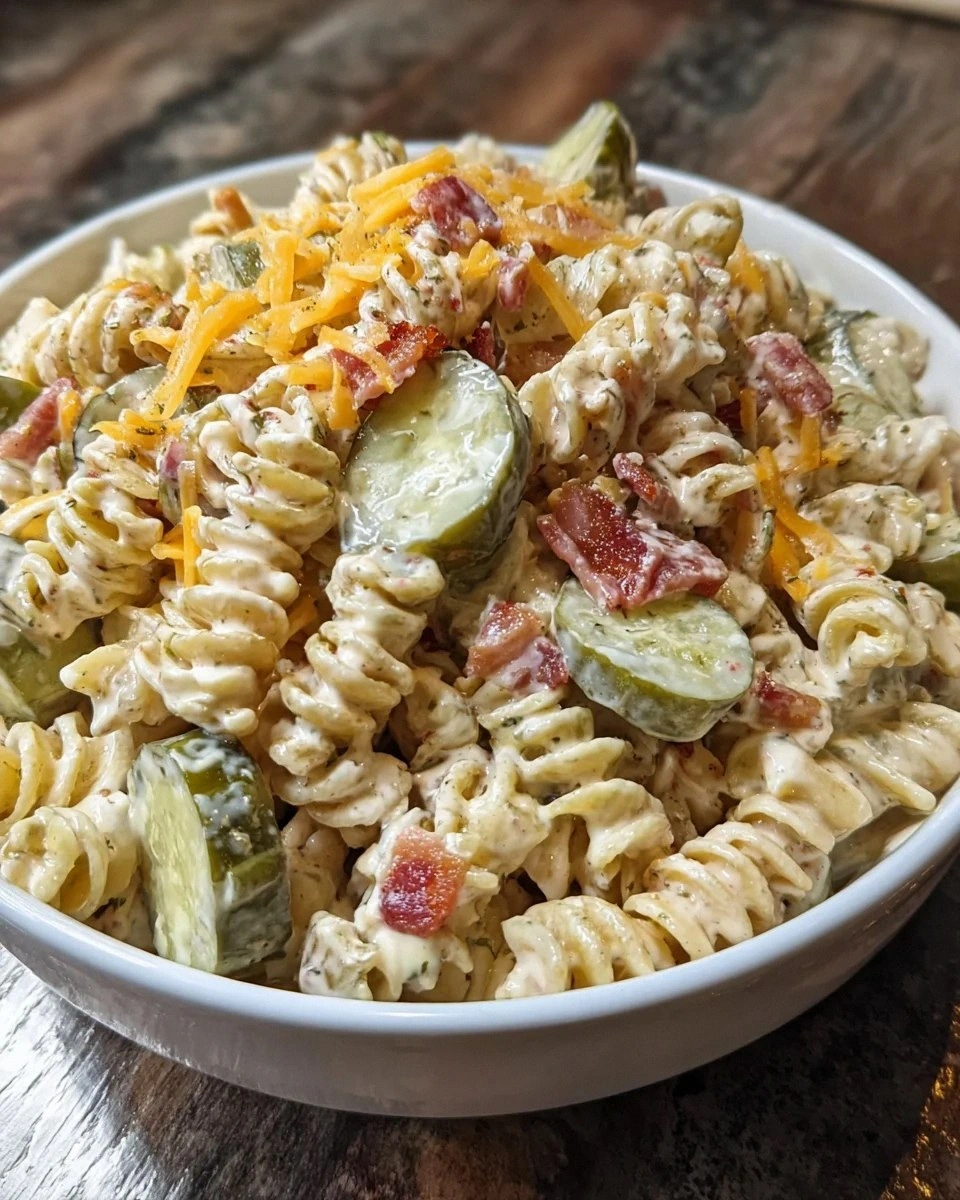
I still remember the first time I combined pickles, pasta, and bacon in one bowl — it was 2 a.m., I was wearing mismatched socks, and my fridge looked like a crime scene from a cooking show gone wrong. Half a jar of dill pickles stared at me next to some leftover rotini, and the bacon I'd cooked earlier had somehow disappeared into a mysterious Tupperware abyss. In my delirious hunger, I tossed them together with reckless abandon, expecting disaster. What happened next was nothing short of culinary sorcery. The tangy pickle brine danced with the smoky bacon fat, creating a sauce that coated every spiral of pasta like liquid gold. That first bite? Pure revelation. The crunch of the pickles, the creamy dressing, the crispy bacon — it was like someone had bottled summer and stirred it into pasta form.
Since that fateful night, I've refined this beautiful chaos into a recipe that has friends texting me at ungodly hours, begging for the formula. I've served it at backyard barbecues where grown adults literally licked their plates clean (true story), at potlucks where it disappeared faster than the host's expensive wine, and at family dinners where even the picky eaters asked for seconds. This isn't just another pasta salad — this is the pasta salad that converts pasta salad skeptics into believers. The secret lies in the balance: the way the pickle brine cuts through the richness of the bacon, how the ranch seasoning ties everything together like a tasty little bow, and why you absolutely cannot skip the dried dill (trust me on this one).
Picture yourself pulling this bowl out of the fridge on a sweltering afternoon, the condensation beading on the glass bowl, steam rising as you give it a final toss. The aroma hits first — that unmistakable tang of pickles mingling with smoky bacon, making your mouth water before you've even grabbed a fork. Your neighbor walks by, catches a whiff, and suddenly remembers they need to borrow sugar. Coincidence? I think not. This salad has powers, my friend, and today I'm handing over the keys to the kingdom. Let me walk you through every single step — by the end, you'll wonder how you ever made it any other way.
What Makes This Version Stand Out
Most pasta salads are afterthoughts — sad, mayo-heavy blobs that sit forgotten on buffet tables. This one? It's the main event. Here's why you'll never look back:
- Texture Paradise: Every forkful delivers a symphony of sensations — the tender pasta spirals, the snap of fresh pickle chunks, the shattering crunch of bacon bits. No mushy mouthfuls here, just pure textural satisfaction that keeps you coming back for one more bite.
- Flavor Bomb Formula: The combination of pickle brine and ranch seasoning creates this umami-packed punch that makes your taste buds do a happy dance. It's tangy, it's creamy, it's smoky — hitting every flavor note in perfect harmony.
- Make-Ahead Magic: Unlike other salads that wilt into sad submission, this beauty gets better as it sits. The flavors meld and deepen, transforming into something even more spectacular overnight. I dare you to taste this and not go back for seconds.
- Crowd Psychology: I've watched this disappear at parties where people claimed they "don't like pickles" or "usually hate pasta salad." Something about this combination bypasses all rational food preferences and speaks directly to the pleasure center of the brain.
- Ingredient Efficiency: Everything comes from pantry staples or items you probably already have lurking in your fridge. No specialty store runs, no expensive ingredients — just smart combinations that taste like a million bucks.
- Season Flexibility: This isn't just a summer thing. I've served it warm in winter as a comforting side dish, cold in summer as a refreshing main, and at room temperature for potlucks where refrigeration is questionable. It adapts like a culinary chameleon.
- The Bacon Factor: Let's be honest — bacon makes everything better. But here, it's not just a garnish; it's a co-star with the pickles, creating this smoky-salty-tangy trifecta that'll ruin you for regular pasta salad forever.
Alright, let's break down exactly what goes into this masterpiece...
Inside the Ingredient List
The Flavor Base
Rotini pasta isn't just cute — those spirals are engineering marvels designed by Italian grandmothers who understood that sauce retention is everything. Each groove captures pockets of dressing, ensuring every bite delivers maximum flavor. While you could use penne or bowties, you'd be missing out on the textural experience that makes this salad legendary. The pasta should be cooked just past al dente since it'll firm up in the cold dressing, giving you that perfect tender-but-not-mushy texture.
The ranch seasoning mix is where the magic starts, but here's what most recipes get wrong — they use too much. You want just enough to whisper "ranch" without screaming it. Think of it as the conductor of an orchestra, bringing all the other flavors into harmony rather than dominating the performance. If you've ever made homemade ranch seasoning, now's your time to shine — the freshness makes a noticeable difference.
The Texture Crew
Cheddar cheese brings the creamy, fatty richness that balances the acid from the pickles. I prefer sharp cheddar because it stands up to the bold flavors rather than disappearing into the background. Cut it into small cubes, not shredded — you want distinct pockets of cheesy goodness, not a homogenous mess. The cheese should be cold when you add it, creating these delightful temperature contrasts with the room-temperature pasta.
Let's talk bacon, because this is where most people mess up. You want it crispy — I'm talking shatter-when-you-bite-it crispy. Those crunchy bits provide the textural counterpoint to the soft pasta and creamy dressing. Turkey bacon works if you're watching calories, but honestly? Live a little. The real stuff brings smoky depth that the salad desperately needs. Cook it until it's almost too dark — it'll soften slightly in the dressing.
The Unexpected Star
Chopped pickles are the diva of this dish, demanding attention with every bite. But here's the thing — not all pickles are created equal. Dill pickles give you that classic tang, but if you're feeling adventurous, try spicy garlic pickles for an extra kick. The key is chopping them into pieces roughly the same size as your cheese cubes. Too small and they disappear; too big and you get pickle overload in one bite.
The pickle brine is liquid gold — don't you dare pour it down the drain. This tangy elixir is what transforms ordinary mayo and sour cream into a dressing that'll make you want to lick the bowl. It brightens everything, cuts through the richness, and ties the whole salad together like a zesty little bow. Make sure it's nice and cold when you add it — warm brine makes for sad, wilted salad.
The Final Flourish
Dried dill might seem like an afterthought, but it's the aromatic bridge between the pickles and the ranch seasoning. Fresh dill works beautifully if you have it — just double the amount since dried herbs are more concentrated. The dill should hit your nose before it hits your tongue, creating this anticipatory moment that makes the first bite even more satisfying.
Sour cream and mayo form the creamy foundation, but here's where personal preference comes in. I like a 50-50 split, but if you want it lighter, bump up the sour cream. Greek yogurt works as a healthier swap, though you'll lose some of that classic creamy texture. The key is letting these come to room temperature before mixing — cold dairy seizes up and creates lumps that no amount of whisking will fix.
Everything's prepped? Good. Let's get into the real action...
The Method — Step by Step
- Start with a large pot of well-salted water — I'm talking ocean-level salty. This is your only chance to season the pasta itself, and undersalted pasta will make your entire salad taste flat. Bring it to a rolling boil, the kind that makes the pot dance and sing. Add your rotini and stir immediately to prevent sticking. Set your timer for one minute less than the package suggests for al dente — the pasta will continue cooking slightly from residual heat and absorb dressing as it chills.
- While the pasta works its magic, lay out your bacon strips in a cold skillet. Yes, cold — starting bacon in a cold pan renders the fat more slowly, giving you evenly cooked strips without burnt spots. Turn the heat to medium and resist the urge to flip too early. That sizzle when it hits the pan? Absolute perfection. Cook until deeply golden and crispy, about 8-10 minutes total, flipping occasionally. Transfer to paper towels and let cool completely — warm bacon will melt your cheese and wilt your pickles.
- Drain the pasta in a colander but don't rinse — you want those starches to help the dressing cling. Immediately spread the pasta on a large baking sheet in a single layer. This stops the cooking process and prevents clumping. Let it cool for about 10 minutes, giving it an occasional stir. The pasta should be warm but not hot when you assemble the salad — hot pasta will break down your dressing and create an oily mess.
- While everything cools, cube your cheddar into 1/4-inch pieces. Consistency is key here — you want every bite to have a perfect pasta-to-cheese ratio. If the cheese is too warm, it'll smear and make your salad look messy. Too cold and it's hard to cut cleanly. Aim for refrigerator temperature but not straight-from-the-freezer cold. Pop it in the freezer for 5 minutes if it's too soft — this trick makes cutting cleaner and prevents squishing.
- Chop your pickles next, aiming for pieces roughly the same size as your cheese cubes. This isn't just about aesthetics — uniform sizes ensure every forkful has the perfect balance of flavors. Save the pickle juice in a separate bowl; you'll need it for the dressing. If you're using whole pickles, cut them in half lengthwise first, then into planks, then into perfect cubes. The brine should smell bright and tangy — if it's murky or smells off, your pickles are too old.
- Time to make the dressing — this is where the magic happens. In a large bowl, whisk together the mayo, sour cream, pickle brine, ranch seasoning, and dried dill. Start with less pickle brine than you think you need; you can always add more. The consistency should be like thick yogurt — it'll thin out when it hits the warm pasta. Taste and adjust: needs more tang? Add brine. Too tart? More mayo. This next part? Pure magic.
- Add the cooled pasta to the dressing and toss immediately. The warm pasta will absorb some of the dressing, creating a glossy coating that clings to every spiral. Don't be shy — really get in there with your spatula, making sure every noodle gets its fair share. The pasta should look creamy but not swimming in dressing — remember, it'll thicken as it chills. Let this sit for 5 minutes to allow absorption.
- Now for the grand finale — add your cheese cubes, chopped pickles, and crumbled bacon. Gently fold everything together, taking care not to smash the cheese or break the bacon into dust. The goal is even distribution without turning it into a homogenous mess. You should see distinct pieces of every component, each one a little flavor bomb waiting to explode in your mouth. Give it a final taste and adjust seasoning with salt and pepper — but go easy on the salt since the pickles and bacon bring plenty.
- Cover tightly with plastic wrap — press it directly onto the surface to prevent a skin from forming — and refrigerate for at least 2 hours. This isn't just about getting cold; it's about flavor development. The pickles infuse the dressing, the bacon flavors permeate the pasta, and everything melds into something greater than the sum of its parts. I'll be honest — I ate half the batch before anyone else got to try it. The waiting is the hardest part, but it's non-negotiable.
That's it — you did it. But hold on, I've got a few more tricks that'll take this to another level...
Insider Tricks for Flawless Results
The Temperature Rule Nobody Follows
Here's what separates good cooks from great ones: understanding how temperature affects texture. Your pasta should be warm when it hits the dressing — not hot, not cold, but that sweet spot where it's still steaming slightly. This warmth opens up the pasta's pores (yes, pasta has pores, fight me) allowing it to absorb maximum flavor. Too hot and your dressing breaks into an oily mess. Too cold and the dressing just sits on top like an unwelcome guest. I stick my finger in the pasta — when I can hold it there for 3 seconds before it burns, we're golden.
Why Your Nose Knows Best
Before serving, give your salad the sniff test. It should smell bright and tangy with hints of smoke and herbs. If it smells flat or overly sour, you've got issues. Flat means it needs more acid — add a splash of pickle brine. Too sour? A pinch of sugar balances it perfectly. This is where most people panic and start adding random ingredients. Don't. Trust your nose, make small adjustments, and taste after each one. A friend tried skipping this step once — let's just say it didn't end well.
The 5-Minute Rest That Changes Everything
After mixing but before chilling, let your salad rest at room temperature for exactly 5 minutes. This brief pause allows the starches in the pasta to start absorbing the dressing, creating a better bond. It's like a pre-soak for your laundry — the difference seems minimal but the results are dramatic. During these 5 minutes, cover the bowl with a clean towel (not plastic wrap) so it can breathe while staying protected. When you move it to the fridge, it'll chill more evenly and the flavors will develop more harmoniously.
The Double-Dressing Method
Here's a restaurant secret: dress your salad twice. Mix everything with about 75% of the dressing, chill it, then just before serving, toss with the remaining 25%. This gives you that glossy, just-dressed appearance while ensuring every bite is perfectly coated. The first dressing soaks in and flavors everything, while the second provides that fresh, creamy finish that makes people think you just whipped it up. Keep the extra dressing in a separate container so it stays pristine.
The Crunch Preservation Society
Nothing ruins this salad faster than soggy bacon. To keep your bacon bits crispy, store them separately in an airtight container with a paper towel to absorb moisture. Add them to individual portions rather than mixing them all in at once. This way, day-old salad still has crunchy bits, and you can adjust the bacon-to-salad ratio based on your mood. Plus, having extra bacon bits on hand is never a bad thing — they're like edible confetti that makes everything better.
Creative Twists and Variations
This recipe is a playground. Here are some of my favorite ways to switch things up:
The Spicy Southern Belle
Add a diced jalapeño and swap the cheddar for pepper jack. Use spicy pickle brine and add a dash of hot sauce to the dressing. Top with crushed red pepper flakes for extra heat. This version brings a kick that sneaks up on you — starting cool and creamy, finishing with a pleasant burn that makes you reach for your drink. Perfect for those who think regular pasta salad is too tame.
The Mediterranean Makeover
Replace cheddar with feta, add kalamata olives and sun-dried tomatoes. Use Greek seasoning instead of ranch, and add a squeeze of lemon juice to brighten everything. The briny olives complement the pickles beautifully, while the sun-dried tomatoes add chewy sweetness. It's like a Greek salad and pasta salad had a delicious baby that inherited the best traits from both parents.
The Breakfast-for-Dinner Remix
Add hard-boiled eggs (chopped small), swap the cheddar for smoked gouda, and include everything bagel seasoning on top. Use bread-and-butter pickles for sweetness. This version tastes like your favorite breakfast sandwich got transformed into a cold pasta dish. The eggs add protein and that comforting breakfast flavor that somehow works perfectly in salad form.
The California Health Nut
Use Greek yogurt instead of sour cream, add diced avocado and cherry tomatoes. Use turkey bacon and add a handful of baby spinach. This lighter version still hits all the flavor notes but feels virtuous enough for lunch every day. The avocado adds creaminess while the tomatoes bring freshness that makes it taste like summer in a bowl.
The Loaded Baked Potato Salad
Add diced potatoes (parboiled until just tender), green onions, and extra cheddar. Use sour cream as the base and skip the mayo entirely. Top with chives and serve slightly warm. This hybrid combines the best of loaded baked potatoes with the convenience of pasta salad. It's comfort food at its finest, perfect for potlucks where you want to bring something familiar but different.
The Sweet and Salty Surprise
Use sweet pickles and add diced apples and toasted pecans. The combination of sweet, tart, and salty creates this addictive flavor profile that keeps people guessing. The apples add crunch that stays crisp even after a day in the fridge, while the pecans bring buttery richness that complements the bacon beautifully.
Storing and Bringing It Back to Life
Fridge Storage
Store in an airtight container for up to 5 days, though it's best within the first 3. Press plastic wrap directly onto the surface before sealing to prevent oxidation. Keep bacon bits separate if you want maximum crunch. The salad will thicken as it sits — thin with a splash of milk or pickle brine when serving. Always use a clean spoon to prevent introducing bacteria that could shorten its lifespan.
Freezer Friendly
While mayo-based salads don't freeze well, you can freeze components separately. Freeze cooked pasta (tossed with a little oil) and bacon bits in separate bags. Thaw overnight in the fridge, then assemble fresh. The dressing can be made 3 days ahead and stored separately. This make-ahead strategy lets you have fresh salad in minutes whenever the craving hits.
Best Reheating Method
Let it sit at room temperature for 15 minutes before serving — cold kills flavor. If it's too thick, add a tiny splash of pickle brine and give it a good stir. For individual portions, microwave for 10-15 seconds just to take the chill off. Never reheat the entire salad — it ruins the texture. Instead, portion what you'll eat and let that come to temperature naturally.