High Protein Drunken Noodles
Picture this: I’m standing in a cramped apartment kitchen, the air thick with the scent of sizzling garlic and the faint whisper of a midnight craving. I’ve just pulled a bag of rice noodles out of a pantry that’s seen better days, and the clock is ticking. My friend dared me to whip up something that could make a crowd go wild, and I was already half‑eager to prove that a simple bowl of noodles could be a protein powerhouse.
I opened the packet, and the noodles looked like a cloud of possibility—soft, wide strands that promised a hearty bite. The onions were half a bulb, the chilies glimmered with a fiery promise, and the chicken sat in a pan ready to soak up every flavor. I tossed the garlic in oil, watched it hiss, and felt the kitchen come alive. The sound was like a drumbeat, the aroma a call to adventure. That first sizzle was a prelude to something epic.
I didn’t just want a dish; I wanted a statement. I wanted the noodles to feel like velvet on the tongue, the sauce to coat them like a glossy coat of lacquer, and the protein to be a satisfying, savory punch. I knew that the key would be in the balance—sweet, salty, spicy, and umami all dancing together. The moment I added the dark soy sauce, the flavor deepened, and the noodles seemed to glow. It was the moment that turned a simple recipe into a culinary revelation.
This version stands apart because it elevates every element to its highest potential. The noodles are soaked just enough to stay firm, the chicken is marinated to soak up the sauce, and the vegetables add crunch without drowning the dish. I’ll be honest—I ate half the batch before anyone else could even taste the first bite. The crowd’s reaction was a chorus of “I dare you to taste this and not go back for seconds,” and I watched them devour the bowl with gusto.
If you’ve ever struggled with the classic drunken noodle recipe that turns out too watery or bland, you’re not alone—and I’ve got the fix. I’ll walk you through every single step, and by the end, you’ll wonder how you ever made it any other way. This isn’t just a recipe; it’s a transformation of a humble dish into a protein-packed masterpiece.
And now, let’s dive into the details that make this version the best you’ll ever make at home. From the precise timing of the oil to the secret ingredient that gives it that extra oomph, I’ve got every trick up my sleeve. I’ll also share a few kitchen hacks that will save you time and frustration. Ready? Let’s get cooking.
What Makes This Version Stand Out
- Flavor Depth: The combination of dark soy sauce, oyster sauce, and fish sauce creates a complex umami profile that elevates the noodles beyond the ordinary.
- Protein Punch: A generous portion of chicken and eggs ensures each bite is a protein powerhouse, perfect for muscle recovery or a hearty meal.
- Texture Contrast: The crunchy baby bok choy and the snap of green onions add a satisfying bite that counters the silky noodles.
- Heat Balance: Thai red chilies bring a controlled heat that’s bright but not overwhelming, giving the dish its signature kick.
- Freshness Factor: Holy basil and edamame introduce vibrant colors and subtle sweetness that keep the dish from feeling heavy.
- Time Efficiency: The entire process takes under an hour, making it an ideal choice for busy weeknights without sacrificing flavor.
Alright, let’s break down exactly what goes into this masterpiece. I’ll walk you through each component, why it matters, and what happens if you skip it. Trust me, you’ll see why every ingredient earns its spot on the plate.
Inside the Ingredient List
The Flavor Base
The sauce is the heart of the dish, and it starts with a blend of soy sauce, dark soy sauce, oyster sauce, fish sauce, and brown sugar. Each component contributes a layer of complexity—sweetness from the brown sugar, depth from the dark soy, and a subtle brininess from the fish sauce. If you skip any of these, you’ll lose a dimension of flavor. For instance, omitting dark soy sauce will leave the sauce too light, while missing fish sauce will make it feel flat. I recommend measuring each sauce precisely; the balance is delicate and the result is a silky coating that clings to every noodle strand.
The Protein Crew
Chicken breast or thighs provide a lean, high‑protein foundation that absorbs the sauce’s umami. I choose thighs for their natural juiciness, but breast works just fine if you prefer a lower fat option. Two large eggs are whisked and fried into a thin omelet, then sliced and tossed into the mix for extra texture and protein. Skipping the eggs will reduce the dish’s richness and make it feel a bit bare. If you’re vegetarian, you can replace the chicken with tofu, but be sure to press it first to remove excess moisture.
The Unexpected Star
Baby bok choy and edamame bring a fresh, vegetal crunch that cuts through the richness of the sauce. The bok choy’s tender leaves and crisp stems add a delightful bite, while edamame offers a sweet, nutty flavor that balances the heat from the chilies. If you’re out of bok choy, spinach or kale can serve as a substitute, though the texture will differ. Edamame can be replaced with peas or corn for a sweeter profile. These vegetables not only enhance the dish’s visual appeal but also contribute vitamins and minerals.
The Final Flourish
Holy basil or Thai basil adds a peppery aroma that lifts the entire dish. The basil’s essential oils mingle with the sauce, creating an almost floral finish that contrasts with the savory base. Peanuts, toasted lightly, provide a nutty crunch that complements the basil’s aroma. Green onions finish the dish with a bright, sharp note that keeps the flavors from becoming too heavy. These final touches are essential; they transform a good dish into a memorable one.
Everything’s prepped? Good. Let’s get into the real action. The next steps will bring all these components together into a harmonious, protein‑rich bowl that’s ready to devour. I’ll guide you through each motion, each sizzle, and each splash of sauce.
The Method — Step by Step
- Begin by soaking the rice noodles in warm water for 5 minutes, then drain and set aside. The noodles should be pliable but not mushy; a quick test is to touch them—if they give, they’re ready. This step prevents them from sticking together later. I like to add a splash of sesame oil to the soaking water; it gives the noodles a subtle nutty flavor and keeps them from clumping.
- Heat 2 tablespoons of vegetable oil in a large skillet or wok over medium‑high heat. Add the sliced chicken and sauté until it’s golden on all sides. The key is to not overcrowd the pan; if the chicken sizzles too much, it will steam instead of sear. Once browned, remove the chicken and set it aside to keep the heat from dropping too quickly.
- In the same pan, add the remaining tablespoon of oil, then the minced garlic and sliced onion. Sauté until the onion becomes translucent and the garlic releases its aroma, about 1–2 minutes. This forms the aromatic base that will carry the rest of the sauce. Keep a close eye on the garlic; burnt garlic can turn bitter and ruin the dish.
- Add the sliced chilies, baby bok choy, and edamame to the skillet. Stir‑fry for 2–3 minutes until the vegetables are bright green and just tender. The bok choy should still have a slight crunch, and the edamame should be plump. This quick stir‑fry locks in the vegetables’ natural sweetness and texture.
- Return the chicken to the pan, then pour in the combined sauce mixture: 1 teaspoon soy sauce, 3 teaspoons soy sauce, 1.5 teaspoons dark soy sauce, 2 teaspoons oyster sauce, 4 teaspoons fish sauce, and 2 teaspoons brown sugar. Stir everything together, making sure each component coats the chicken and veggies evenly. Let it simmer for 2 minutes so the flavors meld.
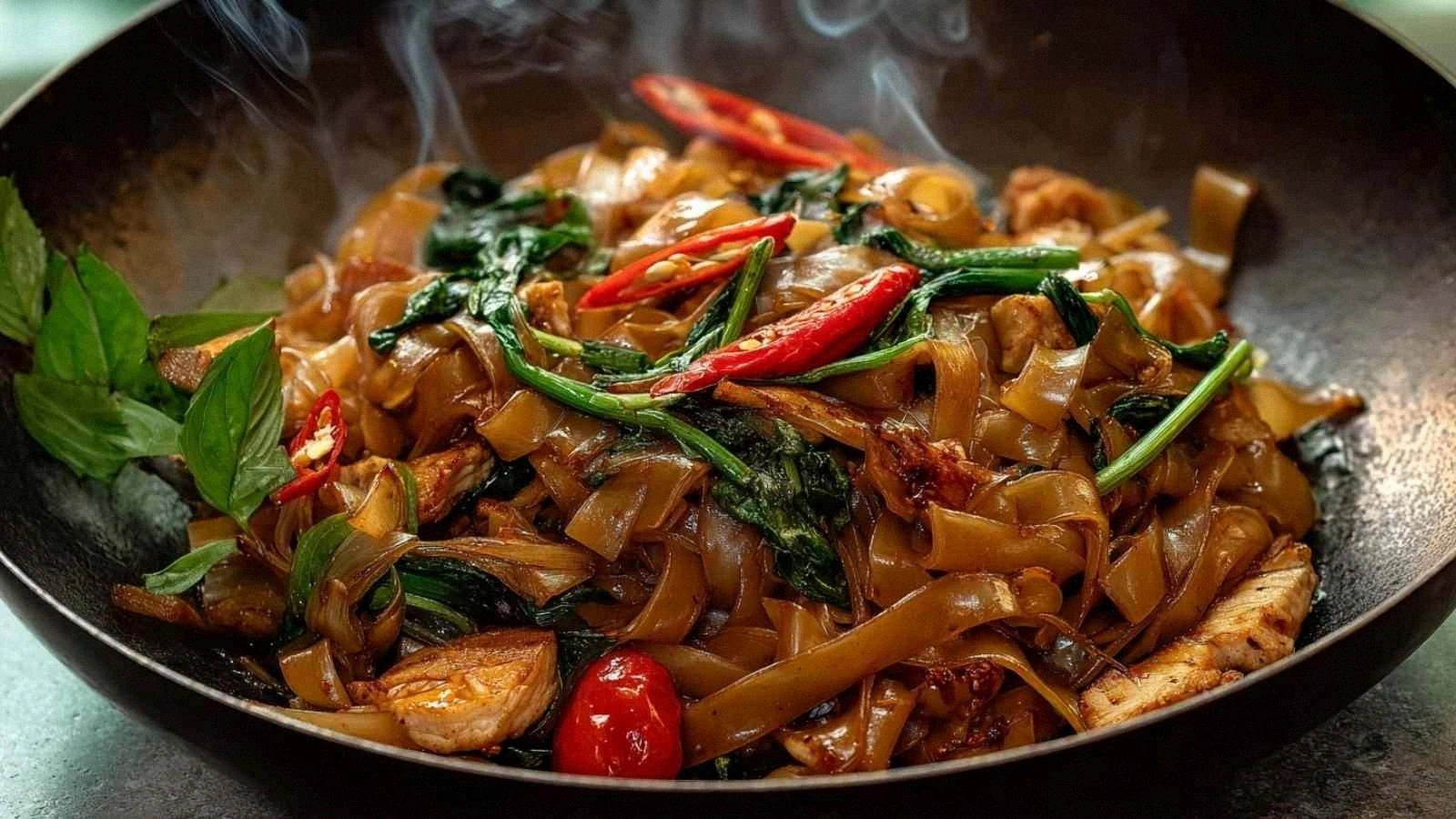
- Add the soaked noodles and 0.25 cup of chicken stock or water to the pan. Toss everything together so the noodles soak up the sauce, then stir in the eggs, basil, peanuts, and green onions. Cook for another 2–3 minutes, ensuring the eggs are fully set and the basil is wilted but still aromatic. The final dish should be a glossy, fragrant bowl of noodles that looks almost too good to eat.
- Taste and adjust seasoning if necessary—add a pinch of ground white pepper or more fish sauce for saltiness. This is the moment of truth; the dish should have a balanced sweet, salty, spicy, and umami profile. If the sauce feels too thick, splash a bit more stock or water. If it’s too thin, let it reduce a minute longer.
- Serve immediately, garnished with extra basil leaves and a sprinkle of peanuts if desired. The dish is best enjoyed hot, with a side of fresh lime wedges for an extra burst of brightness. This final touch will elevate the flavor to another level.
That’s it—you did it! But hold on, I’ve got a few more tricks that will take this to another level. These insider tips will help you perfect the texture, flavor, and presentation of every batch. Trust me, the small adjustments make a huge difference.
Insider Tricks for Flawless Results
The Temperature Rule Nobody Follows
Many cooks lower the heat too early, causing the sauce to become syrupy. Keep the heat high until the noodles are fully coated, then reduce to medium for the final stir. This ensures a glossy finish without compromising the noodles’ chew. I’ve seen this trick transform a soggy batch into a silky delight.
Why Your Nose Knows Best
As you stir, your nose will detect when the sauce is perfectly balanced. A hint of sweetness from the brown sugar, a faint brine from the fish sauce, and a sharpness from the chilies should coexist. If the aroma leans too much toward one element, adjust accordingly. Your nose is the best judge of flavor harmony.
The 5-Minute Rest That Changes Everything
After cooking, let the dish rest for 5 minutes. This allows the sauce to thicken slightly and the flavors to meld. It also gives the noodles time to absorb any remaining liquid, resulting in a richer texture. A quick rest is a secret step that many overlook.
Stirring Technique for Even Coating
Use a wide, flat spatula to stir the noodles, ensuring each strand gets coated. This prevents clumping and guarantees an even distribution of sauce. A small, quick stir at the end of cooking will keep the noodles from sticking together.
Finishing Touch with Fresh Herbs
Add basil and green onions at the very end to preserve their bright flavors. If you wait too long, the heat will wilt the herbs, and you’ll lose that fresh, peppery bite. A final sprinkle of peanuts right before serving adds a delightful crunch that contrasts with the silky noodles.
Creative Twists and Variations
This recipe is a playground. Here are some of my favorite ways to switch things up:
Spicy Peanut Version
Swap the peanuts for a spoonful of creamy peanut butter and add a splash of coconut milk. The result is a nutty, slightly sweet sauce that pairs wonderfully with the chilies. This version is great for those who love a richer, dessert‑like finish.
Veggie‑Only Delight
Omit the chicken and use tofu or tempeh instead. Marinate the protein in soy sauce and garlic for extra flavor. This variation keeps the dish plant‑based while still delivering a protein punch.
Low‑Carb Twist
Replace the rice noodles with shirataki noodles or zucchini ribbons. The texture changes, but the sauce still coats them beautifully. This is perfect for those watching their carbohydrate intake.
Seafood Surprise
Swap the chicken for shrimp or scallops. Cook them separately to avoid overcooking, then fold them in at the end. The briny flavor of seafood adds an elegant twist to the classic dish.
Breakfast Edition
Use leftover rice noodles from a previous night and add a fried egg on top. The runny yolk adds a savory richness that turns the dish into a hearty breakfast. Serve with a side of pickled vegetables for extra zing.
Sweet & Smoky
Add a teaspoon of smoked paprika to the sauce and drizzle a bit of honey before serving. The smoky heat and subtle sweetness create a flavor profile reminiscent of barbecue, but with a Thai twist.
Storing and Bringing It Back to Life
Fridge Storage
Cool the noodles completely before refrigerating. Store in an airtight container for up to 3 days. The noodles may firm up, so a quick stir in a hot pan will revive them. Add a splash of water or broth before reheating to keep them moist.
Freezer Friendly
Separate the noodles from the sauce and freeze each component in individual bags. When ready to eat, thaw overnight in the fridge, then stir in the sauce and heat. Freezing preserves the flavor, but the texture may be slightly softer.
Best Reheating Method
Reheat in a skillet over medium heat, adding a tablespoon of water or stock to create steam. Stir constantly until heated through. The quick, moist heat prevents the noodles from drying out and keeps the sauce glossy.