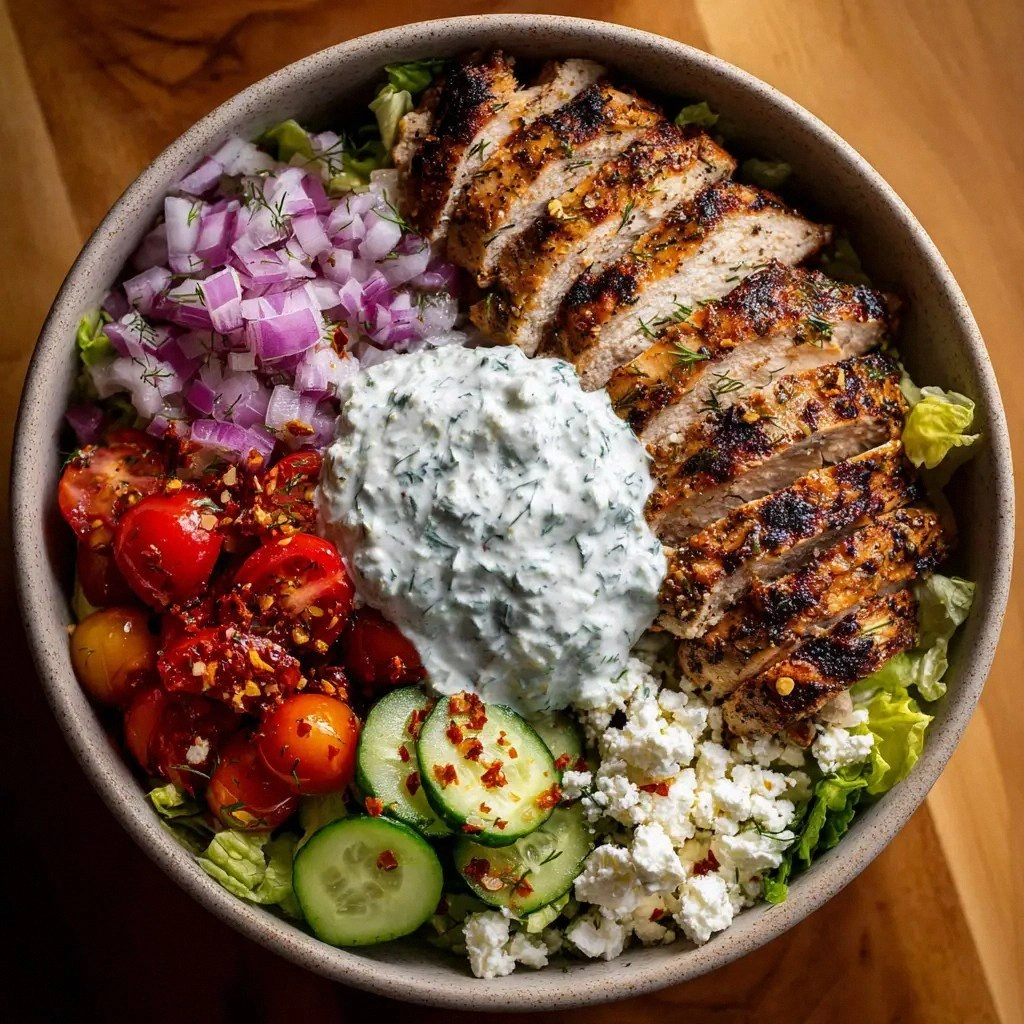
Picture this: I’m standing in a cramped kitchen, the air thick with the scent of a burnt pizza that should have been a gourmet masterpiece. My friends were waiting for dinner, and I was scrambling to salvage what I could. I thought, “I can’t just serve a sad, overcooked meal.” That moment of panic birthed my obsession with a dish that would turn a culinary catastrophe into a triumph: the Greek Chicken Bowls, the ultimate version that will forever change how you think about comfort food.
The first bite is an orchestra of flavors: the bright citrus of lemon, the earthy bite of oregano, the briny whisper of Kalamata olives, and the creamy, tangy splash of Greek yogurt. The crunch of fresh cucumber and the burst of cherry tomatoes dance against the tender, juicy chicken, while the soft quinoa provides a comforting, slightly nutty base. The aroma alone—olive oil sizzling, garlic roasting—draws you in, and the sight of that golden-brown chicken coating the bowl looks like a piece of edible art. Every element feels purposeful, like each ingredient was chosen to harmonize and elevate the whole.
What sets this version apart is the meticulous balance of simplicity and depth. I’ve stripped away the fluff, keeping only the core components that deliver maximum flavor. I’ve added a secret ingredient that most recipes miss: a splash of fresh dill in the yogurt sauce that lifts the entire dish. And the best part? It’s a single‑pan, no‑fuss meal that can be plated in under 30 minutes, yet feels like a restaurant‑quality dinner. If you’re tired of the same old chicken bowls that taste bland or too heavy, this is the answer.
So, let me walk you through every single step. By the end, you’ll wonder how you ever made it any other way. I dare you to taste this and not go back for seconds.
What Makes This Version Stand Out
- Flavor Depth: The combination of fresh lemon, oregano, and dill creates a bright, herbaceous profile that cuts through the richness of the chicken.
- Texture Contrast: Juicy chicken, crisp cucumber, and soft quinoa provide a satisfying mix of mouthfeel.
- Ease of Prep: All steps can be done in one pan or in a small pot, making cleanup a breeze.
- Nutrition Boost: Quinoa adds protein and fiber, while Greek yogurt replaces heavy cream for a lighter finish.
- Versatility: Swap in brown rice, cauliflower rice, or even chickpeas for different dietary needs.
- Make‑Ahead Friendly: The bowl can be assembled a day ahead; the quinoa and chicken keep well, and the yogurt sauce stays fresh.
- Crowd‑Pleaser: The bright colors and vibrant flavors make it a hit at family gatherings or potlucks.
- Ingredient Quality: Using high‑quality extra‑virgin olive oil and authentic Kalamata olives elevates the entire dish.
Alright, let's break down exactly what goes into this masterpiece…
Inside the Ingredient List
The Flavor Base
The olive oil, fresh lemon juice, minced garlic, oregano, dill, salt, and pepper form the backbone of this dish. Olive oil is more than a cooking medium; it carries the herbs and gives the chicken a silky coat. Lemon juice not only brightens the flavor but also helps break down the proteins, resulting in tender chicken. If you’re short on time, you can use bottled lemon juice, but fresh is always better. A pinch of salt and pepper balances everything—don’t skip it.
Swap the oregano for thyme if you prefer a slightly sweeter note. Dill is a unique choice that adds a subtle anise flavor; if you can’t find fresh dill, dried dill will work, just use a bit less. The key is to keep the ratio balanced—too much dill can overpower the dish.
Buying tip: Choose extra‑virgin olive oil with a fruity, peppery finish; it will make the entire bowl taste more vibrant. Look for oils that are cold‑pressed and labeled “bottled in the dark” to preserve flavor.
The Texture Crew
Quinoa is the unsung hero here, providing a fluffy, slightly nutty base that soaks up the sauce. Cook it in low‑sodium chicken broth instead of water for an extra layer of flavor. If you’re vegan, use a plant‑based broth and replace the Greek yogurt with coconut yogurt for a dairy‑free option.
Cucumber adds a refreshing crunch; slice it thin so it melts slightly in the bowl. Cherry tomatoes burst with juiciness, delivering a sweet contrast to the savory chicken. A half‑red onion adds sharpness, while Kalamata olives contribute a salty, briny punch. Feta cheese brings a creamy, salty tang that balances the acidity of the yogurt sauce.
If you’re looking for a low‑carb version, swap quinoa for cauliflower rice. For a protein boost, add grilled chickpeas or a scoop of cooked lentils.
The Unexpected Star
The Greek yogurt sauce is the dish’s secret weapon. It’s creamy, tangy, and light enough to keep the bowl from feeling heavy. Mixing in a splash of fresh lemon juice and dill elevates the sauce to a silky dressing that coats each bite. The yogurt also acts as a cooling agent, balancing the heat from the oregano and pepper.
If you can’t find Greek yogurt, a thick plain yogurt or a mixture of cottage cheese and milk will work. For a vegan twist, use silken tofu blended with lemon juice and herbs.
Tip: Chill the sauce in the fridge for 15 minutes before serving; this helps the flavors meld and the yogurt sets a bit, making it easier to drizzle.
The Final Flourish
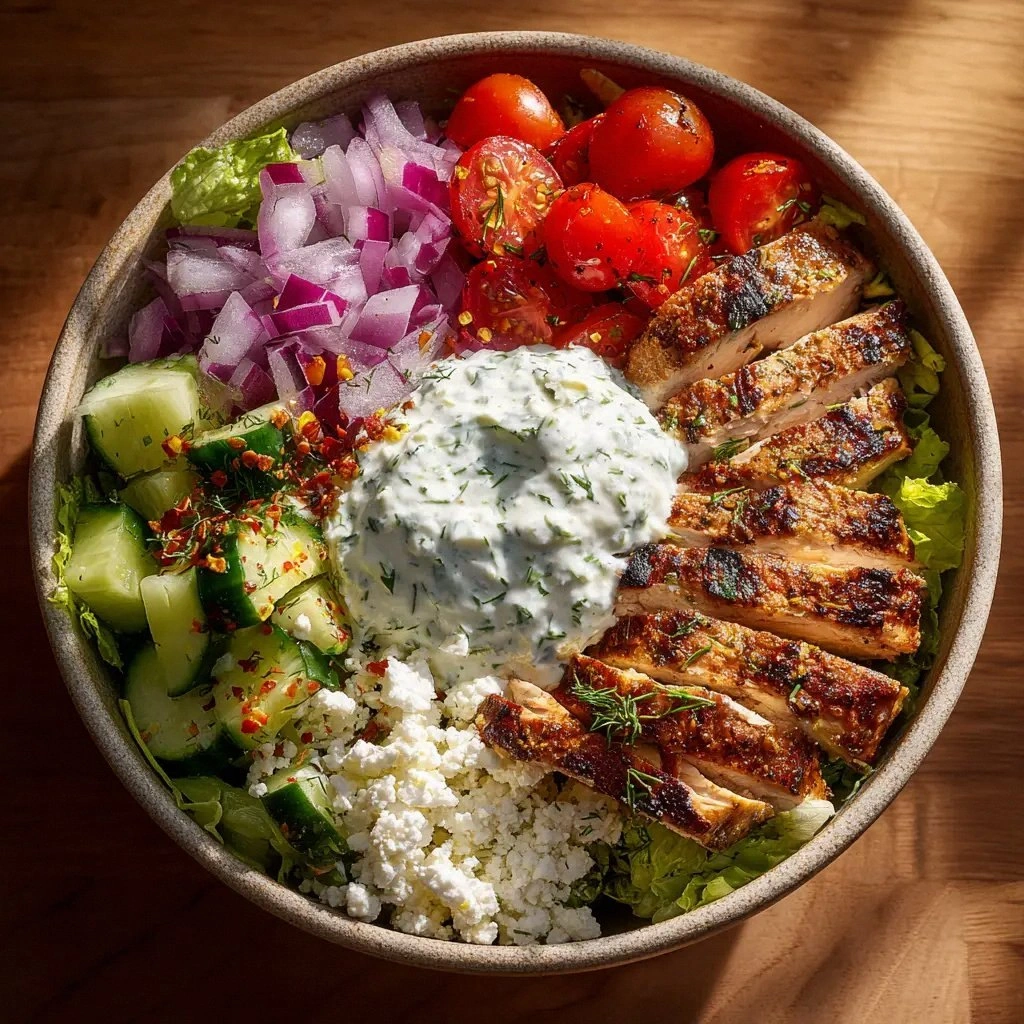
A handful of chopped fresh dill and a squeeze of lemon at the end of plating add a burst of freshness that cuts through the richness. A sprinkle of cracked black pepper gives a subtle heat that lingers on the tongue. The presentation is simple yet striking—layer the quinoa, top with chicken, then scatter the veggies and finish with feta and dill.
If you’re plating for a crowd, consider arranging the components in a circular pattern to create a vibrant, Instagram‑ready look. A drizzle of extra‑virgin olive oil over the top adds shine and a final flavor punch.
Everything's prepped? Good. Let's get into the real action…
The Method — Step by Step
- Begin by seasoning the chicken breasts with salt, pepper, oregano, and a generous splash of lemon juice. Let them marinate for at least 15 minutes—if you have time, 30 minutes is ideal. While the chicken rests, rinse the quinoa under cold water and set it aside. This step ensures the grains stay fluffy and prevent a gummy texture.
- Heat a large skillet over medium‑high heat and add the olive oil. Once the oil shimmers, place the chicken breasts in the pan. Sear for 3–4 minutes on each side until a golden crust forms. The sear locks in juices and gives the chicken a caramelized exterior. Watch the edges; they should pull away from the pan as they cook.
- While the chicken cooks, bring a pot of salted water to a boil. Add the quinoa, reduce the heat to low, cover, and simmer for 15 minutes. The quinoa should absorb the water and become tender. Keep an eye on the pot; if it boils over, reduce the heat immediately.
- Once the chicken is cooked through, remove it from the skillet and let it rest for 5 minutes. Resting allows the juices to redistribute, keeping the meat moist. Slice the chicken into strips or bite‑size pieces, depending on your preference.
- In the same skillet, add a splash more olive oil if needed and toss in the minced garlic. Sauté until fragrant—about 30 seconds—watching carefully to avoid burning. Garlic can turn bitter quickly, so keep the heat moderate.
- Add the cooked quinoa to the skillet, stir to combine, and let it toast lightly for 2 minutes. This step adds a subtle nutty flavor. Then, fold in the sliced chicken, diced cucumber, cherry tomatoes, sliced red onion, Kalamata olives, and crumbled feta. Toss gently to distribute everything evenly.
- Prepare the yogurt sauce by mixing Greek yogurt with fresh lemon juice, dill, a pinch of salt, and a dash of pepper. Whisk until smooth. If the sauce is too thick, add a splash of olive oil or a little water to reach the desired consistency.
- Divide the quinoa‑chicken mixture among four bowls. Drizzle the yogurt sauce over the top, then garnish with extra dill and a lemon wedge. Serve immediately, and watch your guests rave about the vibrant flavors.
That’s it— you did it. But hold on, I've got a few more tricks that'll take this to another level…
Insider Tricks for Flawless Results
The Temperature Rule Nobody Follows
Many people cook chicken at a high heat and then lower it abruptly, which can cause the outside to dry out while the inside remains undercooked. Instead, start at medium‑high for the sear, then reduce to medium to finish cooking. This gradual temperature shift keeps the chicken juicy and ensures a consistent texture. I once tried the opposite and ended up with a dry, rubbery center that made everyone groan.
Why Your Nose Knows Best
The aroma of fresh oregano and lemon is a telltale sign that the flavor profile is balanced. If the scent is too sharp, the dish may be over‑seasoned. Conversely, a faint aroma means you’re under‑seasoning. Trust your nose to adjust seasoning in real time; a quick sniff is better than a taste test that might ruin the dish.
The 5‑Minute Rest That Changes Everything
Letting the chicken rest for exactly five minutes after cooking is the secret to juicy bites. During this time, the juices redistribute throughout the meat, preventing them from spilling out when you cut. I’ve seen people skip this step and end up with a dry, disappointing bite. The five minutes are worth the wait.
Keep the Yogurt Sauce Cold
A chilled yogurt sauce contrasts beautifully with the warm quinoa and chicken. Chill it in the fridge for 15 minutes before serving, or keep it in a small bowl on a tray of ice. This temperature difference amplifies the freshness and gives the dish a more vibrant taste.
Use a Non‑Stick Skillet for Easy Cleanup
A high‑quality non‑stick skillet not only reduces the need for excess oil but also makes cleanup a breeze. If you’re cooking multiple bowls, a stainless‑steel pan works fine too, but be sure to oil the surface generously to prevent sticking. I’ve had the most trouble cleaning up after a skillet that had food stuck to it.
Finish With a Fresh Herb Burst
Right before serving, sprinkle fresh dill or parsley over the bowls. The fresh herbs release their essential oils, giving the dish a bright, aromatic finish. This final touch makes the dish feel elevated and professional, and it’s a trick I learned from a Greek family friend who always plated with a flourish.
Creative Twists and Variations
Mediterranean Chickpea Bowl
Swap the quinoa for chickpeas and add a squeeze of pomegranate molasses for a sweet‑savory kick. Chickpeas give a hearty texture and a protein boost, making the dish more filling. This version is perfect for a plant‑based crowd.
Spicy Greek Chicken Bowl
Add a pinch of red pepper flakes to the yogurt sauce and a splash of hot sauce to the chicken. The heat balances the tanginess and brings a lively edge. My friends love the fiery contrast; it’s a guaranteed crowd‑pleaser.
Cauliflower Rice Version
Replace quinoa with cauliflower rice for a low‑carb, grain‑free alternative. The cauliflower adds a subtle sweetness that pairs well with the feta and olives. This variation works great for keto or paleo diets.
Greek Chicken Pita Wrap
Fold the chicken and veggies into warm pita pockets, drizzle with yogurt sauce, and top with fresh herbs. The pita adds a chewy texture and turns the bowl into a handheld meal. It’s a fun twist for a quick lunch.
Summer Salad Bowl
Omit the quinoa entirely and serve the chicken and veggies over mixed greens. Add a splash of olive oil and balsamic vinegar for extra depth. This lighter version is ideal for hot summer days.
Greek Chicken Bowl with Rice Pilaf
Cook a simple rice pilaf with onions, garlic, and a pinch of saffron for a fragrant base. The pilaf complements the Greek flavors and adds a luxurious feel. It’s a great option for special occasions.
Storing and Bringing It Back to Life
Fridge Storage
Store the assembled bowls in airtight containers for up to three days in the refrigerator. Keep the yogurt sauce separate until ready to serve; this prevents the sauce from becoming watery. When ready to eat, simply reheat the bowl in the microwave for 1–2 minutes, stirring halfway through.
Freezer Friendly
For longer storage, freeze the cooked quinoa, chicken, and veggies separately in freezer‑safe bags. The yogurt sauce should be frozen in a small container and thawed in the fridge before use. When reheating, use a microwave or a skillet over low heat to warm each component evenly.
Best Reheating Method
The key to reheated bowls is to add a tiny splash of water or broth to the quinoa and chicken. This steams the grains back to fluffiness and keeps the chicken moist. A quick whisk of the yogurt sauce with a little warm water before adding to the bowl restores its silky texture.