Ever tried a ramen that feels like a hug from a grandma who’s secretly a culinary wizard? I was in a frantic rush, the clock ticking, and my fridge only offered a single rotisserie chicken. I thought, “What if I could turn that leftover into something that feels like a full‑body comfort food?” The result was a bowl that made me question whether I’d ever again settle for a bland, store‑bought cup. That moment was the spark that set the stage for the ultimate savory rotisserie chicken ramen.
Picture this: the kitchen hums with a gentle simmer, the aroma of soy and ginger rises like a fragrant cloud, and the sound of eggs cracking into a hot pot is the soundtrack of culinary triumph. Your eyes catch the glossy sheen of the broth as it swirls, the carrots slicing into translucent ribbons, and the mushrooms releasing a rich umami perfume. The texture of the noodles is silky, not too soft, and the chicken is tender, every bite a burst of flavor that lingers on the tongue. I swear, that first spoonful is a revelation—like the universe decided to whisper its secrets into your bowl. The steam rises, and you can almost taste the anticipation of the next bite.
What sets this version apart is the way each element is elevated, not just combined. The rotisserie chicken is the star, but the broth is a masterclass in balance: salty, sweet, spicy, and a whisper of citrus from the mirin. The eggs are poached to a silky finish, the scallions add a sharp brightness, and the serrano chilies give a heat that stays on the palate, not the throat. I dare you to taste this and not go back for seconds. This isn’t just another ramen recipe; it’s a culinary revelation that makes your taste buds dance and your heart sing.
And here’s the twist you didn’t see coming: a splash of sesame oil at the end that coats the noodles like velvet, a dash of cayenne that gives a subtle kick, and the subtlety of ginger that ties everything together. Picture yourself pulling this out of the pot, the whole kitchen smelling incredible, and knowing you’ve just created a dish that feels like a hug wrapped in noodles. If you’ve ever struggled with ramen that feels too watery or too bland, you’re not alone—and I’ve got the fix. Let me walk you through every single step—by the end, you’ll wonder how you ever made it any other way.
What Makes This Version Stand Out
- Flavor: The broth is a symphony of umami, sweet, and heat, crafted from a base of soy sauce, mirin, and fresh ginger. It coats the noodles like velvet, leaving every bite saturated with depth.
- Texture: The noodles are al dente, the chicken is shredded to melt‑in‑your‑mouth tenderness, and the eggs are poached to silky perfection. The contrast between crunchy scallions and soft mushrooms creates a satisfying bite.
- Ingredient Quality: Using a whole rotisserie chicken ensures the meat is flavorful and moist, while fresh shiitake mushrooms add earthiness that elevates the broth.
- Heat Balance: The serrano chilies provide a clean, bright heat that doesn’t overwhelm the savory notes, while the cayenne pepper adds a subtle depth.
- Make‑Ahead Potential: The broth can be made a day ahead, allowing the flavors to meld and intensify. The dish reheat beautifully without losing its integrity.
- Audience Appeal: Whether you’re a ramen aficionado or a beginner, the familiar comfort of rotisserie chicken meets the adventurous spirit of homemade broth.
Alright, let's break down exactly what goes into this masterpiece. And trust me, the next part? Pure magic.
Inside the Ingredient List
The Flavor Base
Rotisserie Chicken: The backbone of this ramen, it infuses the broth with a smoky, savory richness that no stock can match. Skipping it would turn this into a generic noodle soup. If you’re on a budget, a frozen rotisserie chicken works just as well; just thaw it fully before shredding.
Water: The medium that carries all the flavors. Too little water will create a thick, cloying soup; too much dilutes the umami punch. For a richer broth, use a combination of water and a splash of chicken stock.
Garlic Powder & Onion Powder: These dry spices are the silent heroes that give depth without the need for sautéing. They’re perfect for a quick prep and don’t add extra liquid to the broth. If you prefer fresh, finely minced garlic and onion work, but adjust the quantity to avoid overpowering the dish.
The Sauce Symphony
Soy Sauce: The salty backbone of the broth, it provides the classic umami foundation that ramen lovers crave. A light soy sauce gives a balanced saltiness; dark soy adds a deeper sweetness. Keep it low-sodium if you’re watching your sodium intake.
Mirin: This sweet rice wine adds a subtle sweetness that balances the saltiness of soy sauce. It also imparts a glossy sheen to the broth. If you can’t find mirin, a mix of rice vinegar and sugar works as a decent substitute.
Ginger: Fresh ginger cuts through the richness, adding a zesty brightness. It also helps tenderize the chicken. If you’re using dried ginger, use half the amount and rehydrate it first.
The Texture Crew
Mushrooms (Shiitake): Their earthy flavor deepens the broth, and they hold their shape well, adding a satisfying bite. If shiitake are out of season, button or cremini mushrooms are fine substitutes.
Carrots: They bring natural sweetness and a pop of color. Slice them thinly so they cook quickly and release their flavor. A pinch of nutmeg can enhance their sweetness if you like a subtle spice.
Eggs: Poached eggs add creaminess and a protein boost. They also create a silky texture that balances the chewy noodles. For a richer taste, you can lightly whisk the yolk into the broth.
The Final Flourish
Sesame Oil: A drizzle at the end coats the noodles, giving a nutty aroma and a silky finish. It also helps prevent the broth from becoming too watery. Use a high‑quality toasted sesame oil for the best flavor.
Scallions: They add a fresh, sharp brightness that cuts through the richness. Slice them thinly so they soften without losing their crunch. A handful of chopped cilantro can also be added for extra freshness.
Serrano Chilies: These chilies give a clean, bright heat that stays on the palate. If you prefer milder heat, replace with jalapeño or remove the seeds. Remember, the heat is meant to be a subtle companion, not a dominating force.
Cayenne Pepper: Just a dash of cayenne gives a subtle depth of heat that lingers. It’s a secret weapon that most ramen recipes miss. If you’re sensitive to heat, use less or skip it entirely.
Everything's prepped? Good. Let's get into the real action.
The Method — Step by Step
- Step 1: Prepare the Broth. In a large pot, bring 8 cups of water to a gentle simmer. Add the shredded rotisserie chicken, soy sauce, mirin, garlic powder, onion powder, ginger, and cayenne pepper. Let it simmer for 15 minutes, allowing the flavors to meld into a rich, aromatic base. This is the moment of truth—your broth should smell toasty, like a Japanese pantry on a winter evening. Keep the heat low to avoid boiling over.
- Step 2: Sauté the Vegetables. While the broth simmers, heat a splash of sesame oil in a separate pan over medium heat. Toss in sliced carrots and shiitake mushrooms, sautéing until they’re just tender but still hold their shape. The caramelization adds depth and a subtle sweetness to the final dish. The sizzling sound is a sign that the vegetables are ready. Set aside for later.
- Step 3: Cook the Noodles. Bring a separate pot of water to a rolling boil. Add the noodles and cook according to package instructions—usually 3-4 minutes for instant ramen. Once cooked, drain and rinse under cold water to stop the cooking process and prevent sticking. This step ensures your noodles stay firm and silky, not mushy. Toss the noodles with a bit of sesame oil to keep them from clumping.
- Step 4: Poach the Eggs. Carefully crack each egg into a small bowl, then slide them into the simmering broth. Cover the pot and let the eggs poach for 4-5 minutes, or until the whites are set but the yolks remain runny. This creates a rich, velvety texture that pairs beautifully with the broth. The trick is to keep the water at a gentle simmer, not a rolling boil.
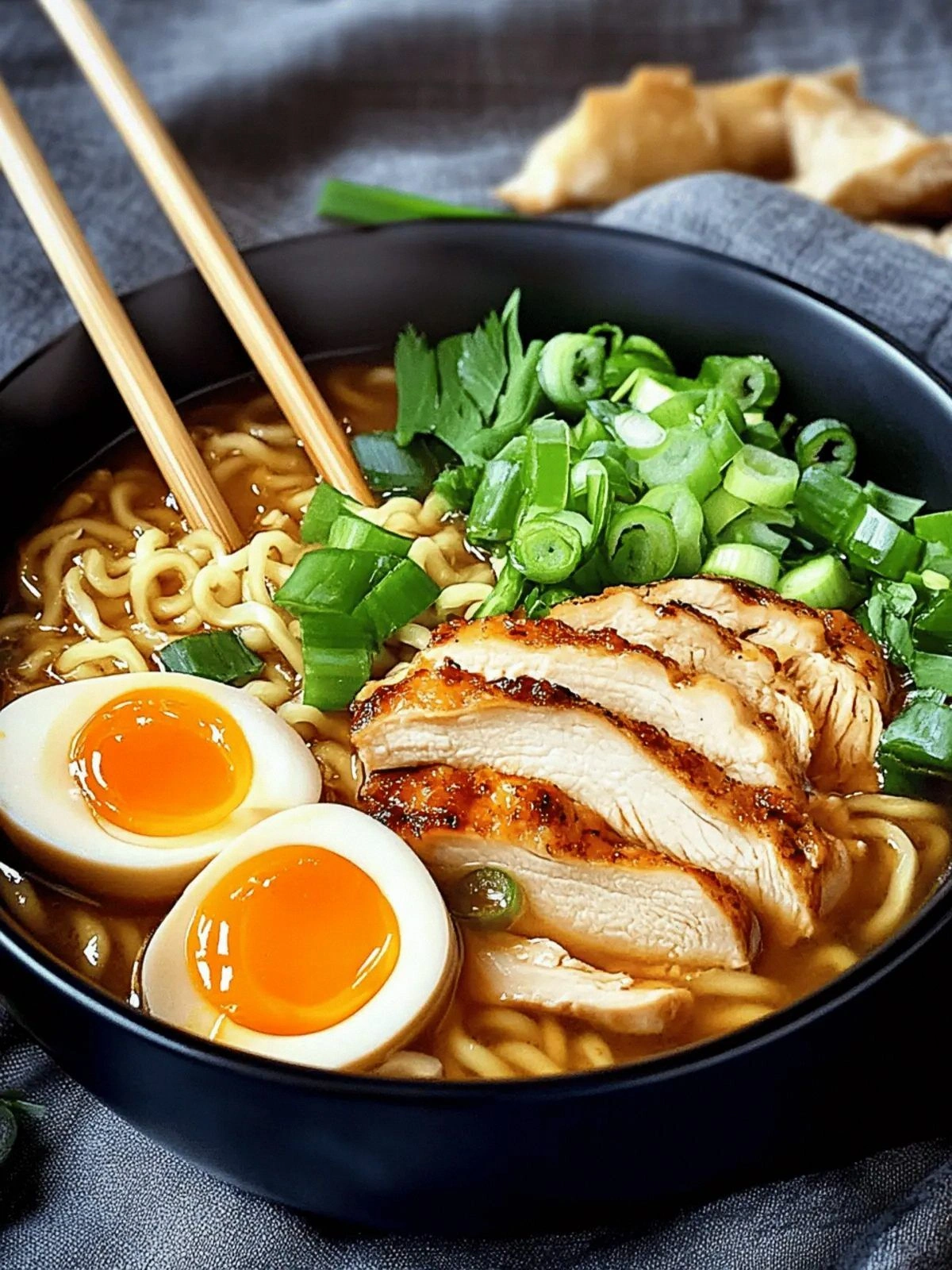
- Step 5: Assemble the Bowl. Divide the cooked noodles among four bowls. Ladle the hot broth over the noodles, ensuring each bowl gets an even distribution of chicken and vegetables. This is the time to watch your bowl come alive—sight, smell, and the anticipation of that first bite.
- Step 6: Add the Eggs. Remove the poached eggs from the broth with a slotted spoon and place them gently on top of the noodles. The yolk should still be slightly runny, creating a luxurious sauce when broken. If you prefer a firmer yolk, adjust the poaching time accordingly. The visual contrast of the bright yolk against the dark broth is a feast for the eyes.
- Step 7: Finish with Freshness. Sprinkle sliced scallions, sliced serrano chilies, and a dash of sesame oil over each bowl. The fresh herbs bring brightness, while the chilies add a clean, lingering heat. This final touch is what makes the dish feel alive and dynamic. The aroma is intoxicating, inviting you to take that first spoonful.
- Step 8: Serve Immediately. Serve the ramen hot, ideally within 10 minutes of assembling to maintain the optimal texture. If you’re entertaining guests, have the broth prepped and ready to pour, so you can serve it fresh each time. The steam rising from the bowls will fill the room with an irresistible scent.
- Step 9: Enjoy and Share. Take a moment to savor the first bite—notice the layers of flavor, the silky eggs, and the subtle heat. Share the experience with friends, and watch their eyes widen at the depth of taste. If you’re feeling adventurous, add a splash of lime juice for a citrusy twist. That final flourish elevates the dish to a new level of sophistication.
Insider Tricks for Flawless Results
The Temperature Rule Nobody Follows
Maintaining a low, steady simmer during broth preparation is crucial. A rolling boil will cause the broth to become cloudy and the chicken to toughen. Keep the heat low and let the flavors infuse gently. The subtle warmth allows the soy and mirin to meld without losing their delicate notes.
Why Your Nose Knows Best
Before adding the eggs, sniff the broth. It should smell like a gentle, savory caramel. If it smells sharp or overly salty, adjust the seasoning. Your nose is the best judge of balance; trust it to guide your seasoning tweaks.
The 5‑Minute Rest That Changes Everything
After the broth has simmered, let it rest for five minutes before adding the vegetables. This allows the flavors to settle, preventing a sharp, raw taste. The rest period also gives the chicken a chance to reabsorb the broth, making it even more tender.
Use Fresh Mushrooms for Depth
Fresh shiitake mushrooms bring a richer umami punch than dried. If using dried, rehydrate them in hot water for 20 minutes and reserve the soaking liquid for the broth. The soaking liquid adds an extra layer of flavor that’s often overlooked.
The Secret of the Sesame Oil Finish
Adding sesame oil at the very end gives a glossy sheen and a nutty aroma that ties everything together. Pour it over the noodles and let it swirl; the oil coats each strand, creating a silky mouthfeel. This step is essential for that restaurant‑level finish.
Creative Twists and Variations
This recipe is a playground. Here are some of my favorite ways to switch things up:
Spicy Korean Fusion
Swap the soy sauce for Korean doenjang paste and add a tablespoon of gochujang. The broth gains a smoky, sweet heat that complements the chicken. Serve with a sprinkle of toasted sesame seeds for crunch.
Creamy Coconut Twist
Add half a cup of coconut milk to the broth for a silky, tropical flavor. The coconut balances the saltiness and adds a subtle sweetness. Pair with sliced pineapple for a bright finish.
Vegetarian Upgrade
Replace the rotisserie chicken with a hearty vegetable broth and add tofu cubes or tempeh for protein. Keep the mushrooms, carrots, and eggs for texture. The result is a comforting bowl that still feels indulgent.
Umami‑Rich Mushroom Ramen
Use a mix of shiitake, enoki, and portobello mushrooms. Increase the mushroom quantity to 4 cups for a deeper earthiness. Add a splash of truffle oil at the end for an extra layer of luxury.
Serrano‑Scented Citrus
Add a sliced orange peel to the broth while it simmers for a citrusy brightness. The orange peel infuses the broth with a subtle, fragrant note that pairs beautifully with the heat of the chilies. Garnish with a few fresh mint leaves for a refreshing finish.
Storing and Bringing It Back to Life
Fridge Storage
Cool the ramen completely before refrigerating. Store in an airtight container for up to 3 days. When reheating, add a splash of water to maintain the broth’s moisture. This trick keeps the noodles from drying out.
Freezer Friendly
Separate the broth, noodles, and toppings before freezing. Freeze the broth in a freezer‑safe container for up to 2 weeks. Reheat the broth gently and re‑cook the noodles separately to preserve texture.
Best Reheating Method
To reheat, bring the broth to a gentle simmer, then add the noodles and eggs. Stir gently to combine. Finish with fresh scallions and a drizzle of sesame oil to restore the original aroma and flavor.