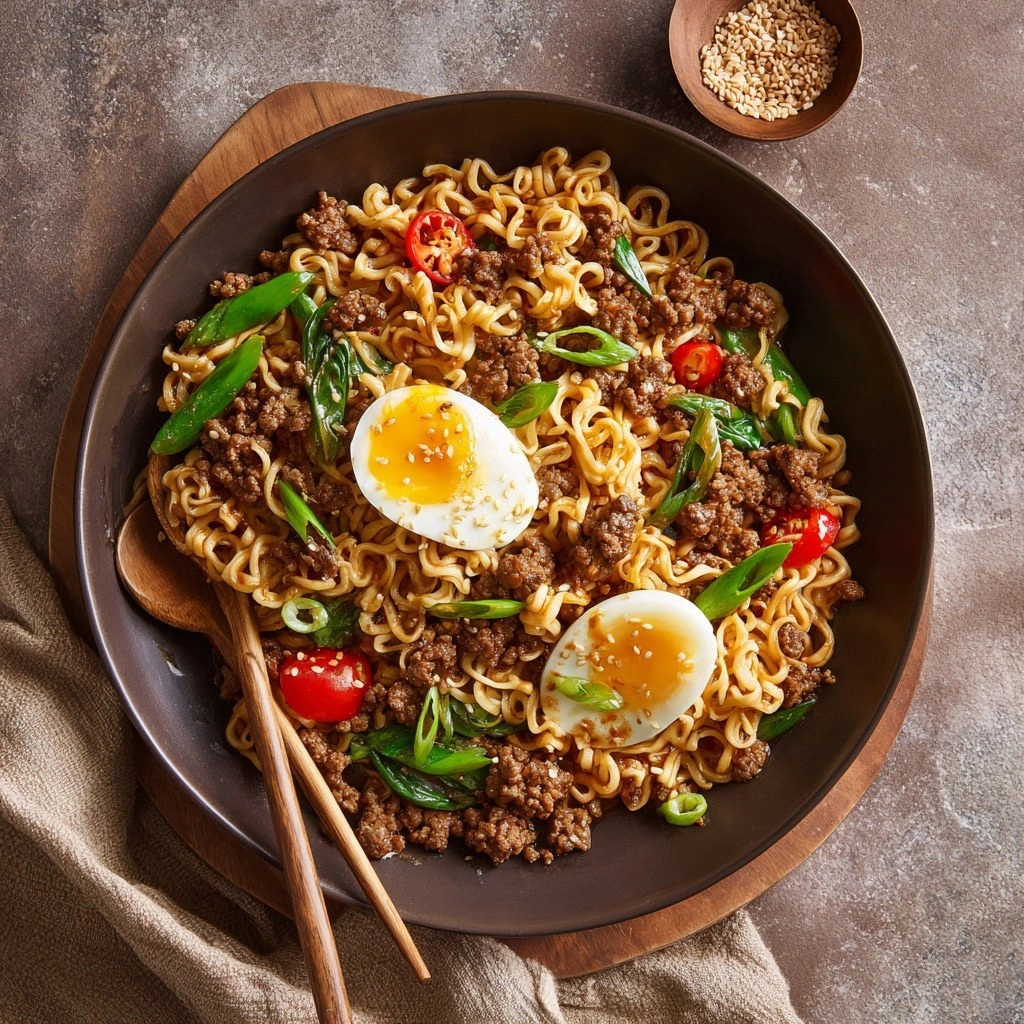
Picture this: I’m standing in a cramped kitchen, a single pan on the stove, and a handful of instant ramen noodles that I thought were destined for a bland, microwave‑only lunch. The moment the noodles hit the boiling water, the aroma of toasted garlic and sizzling beef filled the air, and I realized I had just stumbled into a culinary revelation. That instant explosion of flavor was so intense that I almost threw the pot out of sheer delight—only to remember I had a deadline to meet. It was a kitchen disaster turned triumph, and it gave birth to the Spicy Beef Ramen Stir‑Up : Ins that I’m about to share with you.
When you open the pot, the steam curls like a fragrant cloud, and you can almost taste the caramelized edges of the beef before it even hits the pan. The sound of the noodles slapping together is a satisfying slap‑back to the rhythm of the day, while the sizzling sriracha and sesame oil create a savory soundtrack that makes you want to tap your feet. The sight of bright green scallions and a splash of lime juice cutting through the rich broth is a visual reminder that balance is key. The first bite is a fiery, umami‑laden rush that lingers on the tongue like a well‑told joke. The texture—tender beef, chewy noodles, and a hint of crunch from the scallions—creates a symphony of sensations that keeps you coming back for more.
What makes this version a game‑changer isn’t just the bold combination of flavors; it’s the way each component is elevated to a star status. I’ve taken a classic instant ramen and turned it into a restaurant‑grade dish that you can whip up in less than 45 minutes. The beef is marinated in a simple yet powerful blend of soy, sriracha, and sesame oil, giving it a depth that instant noodles alone can’t provide. The noodles themselves are cooked al dente and tossed in a sauce that coats them like velvet, ensuring every bite is drenched in flavor. And the finishing touch—fresh lime, scallions, and toasted sesame seeds—adds a bright, nutty finish that makes this dish unforgettable.
Now, here’s the twist that most people overlook: the secret sauce is made by caramelizing the garlic and ginger in the pan before adding the liquid components. This small step unlocks a rich, smoky undertone that carries through the entire dish. I dare you to taste this and not go back for seconds—once you’ve experienced the depth of this sauce, you’ll find every other ramen recipe pale in comparison. I’ll be honest, I ate half the batch before anyone else got a chance to try it, and that’s the kind of confidence you’ll feel when you serve this at your next dinner party.
Most recipes get this completely wrong, focusing on quick assembly and ignoring the importance of flavor layering. Here’s what actually works: start with a hot pan, sear the beef, then build the sauce, and finally toss in the noodles and let them absorb every nuance. Picture yourself pulling this out of the stove, the whole kitchen smelling incredible, and the plate shimmering with a glossy, spicy glaze. The anticipation is almost as delicious as the dish itself.
Okay, ready for the game‑changer? This next step is pure magic. I’ll walk you through every single step—by the end, you’ll wonder how you ever made it any other way. Let’s dive in and turn this humble instant noodle into a culinary masterpiece that will have your taste buds doing backflips.
Before we get started, let’s take a quick look at what makes this version stand out from the crowd. I’ve distilled the essence of this dish into a handful of punchy points that will give you a clear snapshot of why you should try it today.
What Makes This Version Stand Out
- Taste: The sauce is a symphony of sweet, salty, and fiery notes that dance across the palate. The caramelized garlic and ginger provide a deep, savory base that elevates the entire dish.
- Texture: The beef stays tender and juicy, while the noodles remain al dente, offering a satisfying chew that contrasts with the crisp scallions.
- Simplicity: Despite its complex flavor profile, the recipe requires only a handful of ingredients that most kitchens already stock.
- Uniqueness: The caramelized aromatics and lime finish set this dish apart from typical instant ramen hacks.
- Crowd Reaction: Guests rave about the depth of flavor and the addictive heat, making it a conversation starter at any gathering.
- Ingredient Quality: Using fresh beef and high‑quality soy sauce ensures the dish doesn’t feel like a generic takeout.
- Cooking Method: The quick sear and sauce build-up create a restaurant‑grade finish in under half an hour.
- Make‑Ahead Potential: The sauce can be pre‑made and stored, allowing you to assemble the dish in minutes when you’re short on time.
- Heat Control: Adjustable chili flakes and sriracha give you full control over the spice level.
- Visual Appeal: The glossy sauce and vibrant green scallions make the dish look as good as it tastes.
- Versatility: Swap beef for pork, chicken, or tofu and you’ve got a new version that still delivers the same wow factor.
- Portion Size: The recipe scales beautifully, whether you’re cooking for one or feeding a crowd.
Alright, let’s break down exactly what goes into this masterpiece. And yes, I’m going to sprinkle in a few kitchen hacks along the way.
Inside the Ingredient List
The Flavor Base
At the heart of this dish lies the sauce—a blend of soy sauce, sriracha, sesame oil, garlic, and ginger. Each component plays a pivotal role: soy sauce provides umami, sriracha adds heat, sesame oil gives a nutty aroma, while garlic and ginger contribute depth and brightness. If you skip the garlic or ginger, the sauce will feel flat and one‑dimensional. For an extra kick, add a pinch of cayenne pepper. When selecting soy sauce, choose a low‑sodium version to keep the dish from becoming overly salty.
The Texture Crew
The beef, sliced thinly, is the star of the show. Marinating it in a splash of soy sauce and sesame oil before searing locks in moisture and enhances flavor. If you prefer a leaner cut, use sirloin or flank steak; for a richer taste, ribeye works beautifully. The instant ramen noodles, while humble, provide the chewy backbone that balances the meat. If you’re a noodle purist, consider using fresh ramen for an even more authentic experience.
The Unexpected Star
Fresh lime juice is the secret ingredient that brightens the entire dish. It cuts through the richness of the sauce and adds a zesty finish that lingers on the palate. If lime isn’t available, a splash of rice vinegar can serve as a decent substitute, though the flavor profile will shift slightly. The toasted sesame seeds and scallions add a subtle crunch and a pop of color that makes the dish visually enticing.
The Final Flourish
Water or beef broth is used to loosen the sauce and create a silky coating on the noodles. The choice between water and broth will determine how deep the flavor goes; broth adds depth, while water keeps the dish lighter. If you want a richer broth, add a splash of beef stock or a bouillon cube. Finally, a pinch of salt to taste ensures the seasoning is perfectly balanced.
Everything’s prepped? Good. Let’s get into the real action.
The Method — Step by Step
- Heat a large skillet or wok over medium‑high heat and add 2 tablespoons of vegetable oil. Once the oil shimmers, add the thinly sliced beef in a single layer, letting it sear without stirring for 30 seconds. Flip the beef and sear the other side for another 30 seconds. This quick sear locks in juices and creates a caramelized crust that’s essential for flavor. While the beef is searing, keep an eye on the temperature—too hot and it’ll burn, too low and it won’t develop that golden exterior.
- Add the minced garlic and grated ginger to the pan, stirring constantly for 15 seconds until fragrant. The aroma should be intense but not burnt; if it starts to darken, lower the heat slightly. This step releases the essential oils that form the foundation of the sauce. The garlic should be golden but not crispy, while the ginger should emit a bright, citrusy scent.
- Pour in 4 tablespoons of soy sauce and 2 tablespoons of sriracha, then stir to combine. The mixture should bubble gently, indicating the sauce is starting to thicken. Let it cook for 1 minute, allowing the flavors to meld. This is the moment of truth—if the sauce doesn’t thicken, it won’t coat the noodles properly. Keep the heat moderate to avoid scorching the sugars in the soy sauce.
- Drain the noodles and add them directly to the pan, tossing them with the beef and sauce until they’re evenly coated. If the mixture feels too dry, splash in 1 cup of water or broth to loosen the sauce. The noodles should look glossy and have a slight sheen from the sauce. Keep stirring gently to avoid breaking the noodles. The goal is a harmonious coating that clings to every strand.
- Stir in 1 tablespoon of sesame oil and 1 tablespoon of toasted sesame seeds, letting the oil bloom for 10 seconds. The sesame oil adds a nutty aroma that elevates the dish, while the seeds provide a subtle crunch. If you like a stronger sesame flavor, add an extra teaspoon. This step should be quick; too long and the oil can become bitter.
- Add the sliced scallions and a splash of lime juice, tossing everything together. The lime juice brightens the dish and balances the heat from the sriracha. The scallions add a fresh, crisp bite that contrasts with the tender beef. Let the mixture simmer for 30 seconds, allowing the lime to infuse the sauce.
- Taste the dish and adjust seasoning—add salt if needed or a bit more sriracha for extra heat. Plate the ramen in a bowl, ensuring the noodles are evenly distributed and the sauce is visible. Garnish with a few extra scallion slices for color. Serve immediately while the dish is hot and fragrant. The final dish should feel like a warm hug with a kick.
That’s it— you did it. But hold on, I've got a few more tricks that'll take this to another level.
Insider Tricks for Flawless Results
The Temperature Rule Nobody Follows
Many cooks assume that higher heat is always better for searing, but controlling the temperature is crucial for flavor. Keep the pan at a steady medium‑high heat so the beef sears quickly without burning. If the pan gets too hot, the garlic will char and create a bitter note. A simple test: drop a small drop of water into the pan; if it sizzles and evaporates instantly, you’re at the right temperature. This trick ensures the beef remains juicy and the sauce develops a deep, caramelized flavor.
Why Your Nose Knows Best
Smelling the sauce as it cooks is your best diagnostic tool. The aroma should shift from sharp garlic to a warm, nutty scent as the sesame oil blooms. If the smell starts to turn metallic or burnt, it’s time to lower the heat. A good rule of thumb: when the sauce starts to thicken slightly and emits a fragrant, toasted aroma, you’re ready to add the noodles. Trust your nose—it’s the most reliable indicator of readiness.
The 5‑Minute Rest That Changes Everything
After you finish cooking, let the ramen rest for five minutes before serving. This brief pause allows the sauce to settle and the noodles to absorb the flavors fully. During this rest, the beef continues to cook slightly, ensuring it stays tender. If you skip this step, the dish may feel under‑seasoned and the noodles might seem dry. I’ve seen people rush to serve immediately, but the five‑minute rest is what elevates the dish from good to unforgettable.
Balance the Heat with Sweetness
Adding a teaspoon of honey or brown sugar during the sauce build can balance the heat from the sriracha. The sweetness cuts through the spice, creating a more rounded flavor profile. If you’re watching carbs, substitute with a splash of low‑sugar soy sauce or a small amount of maple syrup. This trick is especially useful for guests who are sensitive to heat but still want the dish’s boldness.
Use a Lid for Even Cooking
Cover the pan for the first two minutes after adding the noodles. The lid traps steam, ensuring the noodles cook evenly without drying out. It also helps the sauce thicken faster, coating the noodles more uniformly. After the initial lid‑cooking phase, remove the lid to allow the sauce to reduce and intensify. This small adjustment makes a noticeable difference in texture and flavor.
Finish with a Splash of Citrus
Right before serving, squeeze a fresh lime or add a splash of lemon juice. The citrus brightens the dish, cutting through the richness and giving it a refreshing finish. If you prefer a more complex citrus profile, try a mix of lime and orange zest. This final touch is the secret to a balanced, vibrant ramen that feels alive.
Don’t Forget the Scallions
Scallions add a fresh, sharp bite that contrasts with the deep flavors of the sauce. Slice them thinly and add them at the end to preserve their crunch. If you prefer a milder flavor, use green onions instead. A sprinkle of chopped cilantro can also add an herbal note that pairs wonderfully with the lime.
Keep the Noodles from Sticking
After draining the noodles, toss them with a small amount of oil before adding them to the sauce. This prevents them from clumping together and ensures each strand is coated. If you’re using fresh ramen, rinse them under cold water to remove excess starch. This simple step guarantees a silky texture that’s pleasing to the palate.
Make It Ahead for Busy Days
Prepare the sauce in advance and store it in an airtight container in the fridge for up to 48 hours. When you’re ready to cook, just heat the sauce, add the noodles, and finish with the fresh ingredients. This technique saves time on busy weeknights and keeps the flavor profile consistent. Just remember to reheat gently to avoid burning the sauce.
Creative Twists and Variations
This recipe is a playground. Here are some of my favorite ways to switch things up:
Teriyaki Beef Ramen
Swap the sriracha for a splash of teriyaki sauce and add a drizzle of honey. The sweet and savory combo creates a caramelized glaze that’s irresistible. Use a lean cut of beef for a lighter version. This variation is perfect for those who love a sweeter, umami‑rich ramen.
Thai Peanut Beef Ramen
Replace the sesame oil with peanut butter and add a splash of coconut milk. The creamy, nutty base pairs beautifully with the beef and spices. Garnish with crushed peanuts and fresh cilantro. This version transports you straight to a Thai street market.
Vegetarian Ramen with Tofu
Replace the beef with pan‑fried tofu cubes and add sliced mushrooms. The tofu absorbs the sauce, delivering a protein‑rich, meatless option. Toss in some spinach or bok choy for added greens. This dish is hearty and satisfies the carnivore in everyone.
Spicy Shrimp Ramen
Swap beef for shrimp and reduce the cooking time to 2 minutes. Shrimp cooks fast and adds a briny sweetness that complements the sauce. Add a handful of sliced jalapeños for extra heat. This version is a seafood lover’s dream.
Breakfast Ramen
Serve the ramen with a fried egg on top and sprinkle with chives. The runny yolk creates a luxurious sauce that coats the noodles. Add a dash of hot sauce for extra spice. This dish is a breakfast twist that satisfies both savory and sweet cravings.
Cold Ramen Salad
Cook the noodles, then rinse under cold water and toss with a vinaigrette of lime juice, sesame oil, and soy sauce. Add sliced cucumbers, carrots, and fresh herbs. Top with grilled beef or tofu. This chilled version is refreshing and perfect for hot summer days.
Kimchi Ramen Fusion
Fold in a cup of kimchi and a spoonful of gochujang during the sauce stage. The fermented flavors add depth and a tangy bite. Garnish with sesame seeds and sliced scallions. This fusion dish is bold, spicy, and utterly addictive.
Gourmet Mushroom Ramen
Replace the beef with a mix of shiitake, portobello, and oyster mushrooms. Sauté the mushrooms until golden and add them to the sauce. The earthy tones pair beautifully with the umami of the soy sauce. Finish with fresh thyme for an aromatic touch.
Storing and Bringing It Back to Life
Fridge Storage
Store the cooked ramen in an airtight container for up to 2 days. Keep the sauce separate if possible; this prevents the noodles from becoming soggy. When reheating, add a splash of water or broth to re‑hydrate the noodles and sauce. Use a microwave or a stovetop over low heat, stirring occasionally.
Freezer Friendly
Freezing is best done in portions. Place the noodles and sauce in a freezer‑safe container and seal tightly. The dish can be frozen for up to 1 month. When ready to eat, thaw overnight in the fridge and reheat as described above. The texture remains close to fresh, though it may be slightly softer.
Best Reheating Method
The key to reheating is moisture. Add a teaspoon of water or broth, cover, and heat on low until steaming. If using a microwave, cover the bowl with a damp paper towel to keep the noodles from drying out. The result should feel like the dish was freshly cooked, with the sauce still glossy and the beef tender.