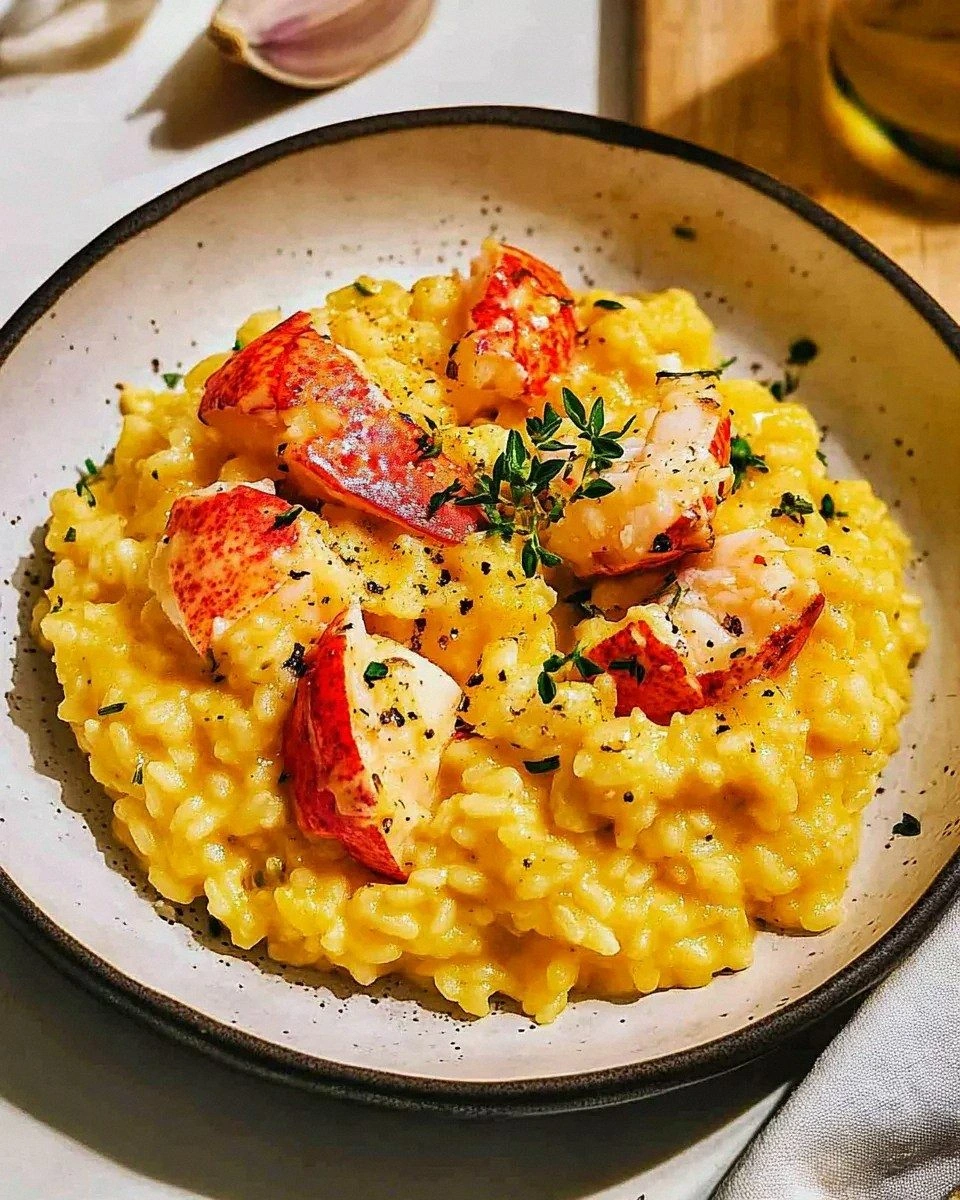
I still remember the first time I attempted lobster risotto. It was a disaster of epic proportions that involved rubbery lobster, mushy rice, and a kitchen that looked like a crime scene. Fast forward through three failed attempts, a very understanding dinner guest who pretended to enjoy my "lobster soup," and one particularly memorable evening where I ended up ordering pizza at 11 PM. That's when I finally cracked the code to what might be the most luxurious comfort food known to humankind.
Picture this: It's a rainy Tuesday night, and you're standing in your kitchen, armed with nothing but a wooden spoon and a dream. The butter starts to foam, the shallots hit the pan with that satisfying sizzle, and suddenly your humble kitchen transforms into a five-star restaurant. The aroma of saffron mingles with the sweetness of lobster stock, and you know you're about to create something magical. This isn't just dinner — it's a love letter to yourself on a plate.
What makes this version different from every other lobster risotto recipe cluttering the internet? I ditched the traditional approach of cooking lobster separately and instead created a method where every single component sings in perfect harmony. The lobster isn't an afterthought tossed in at the end; it's the star that infuses every grain of rice with oceanic sweetness. Most recipes get this completely wrong, treating the lobster like a garnish rather than the main event. Here's what actually works.
Let me walk you through every single step — by the end, you'll wonder how you ever made it any other way.
What Makes This Version Stand Out
Restaurant-Quality Texture: We're talking about rice that's creamy yet maintains the slightest resistance when you bite into it — what the Italians call "al dente." Each grain is perfectly coated in starchy lobster stock, creating a sauce that coats the rice like velvet. This isn't the gloppy, overcooked mess you get at mediocre restaurants.
Zero Waste Philosophy: Every part of the lobster becomes liquid gold. The shells get roasted until fragrant, then simmered into the most intense stock you've ever tasted. Even the tomalley (that green stuff most people discard) adds incredible depth of flavor. If you've ever struggled with getting maximum value from an expensive lobster, you're not alone — and I've got the fix.
One-Pot Wonder: Okay, I lied about one pot — we use two. But hear me out: one for the stock (which you can make ahead) and one for the actual risotto. No transferring to warm serving dishes, no juggling multiple pans. The entire dish comes together in a single, beautiful Dutch oven that goes straight from stove to table.
Fail-Proof Technique: Most recipes tell you to stir constantly, which is a one-way ticket to carpal tunnel and still doesn't guarantee perfect results. My method involves strategic stirring that develops just the right amount of starch without turning your arm into a noodle.
Make-Ahead Friendly: Picture yourself pulling this out of the oven, the whole kitchen smelling incredible, and your guests thinking you've been slaving away all day. The truth? You prepped everything this morning and just finished it off. This next part? Pure magic.
Weeknight Luxury: Who says you need a special occasion to eat like royalty? This recipe scales down beautifully for two people or scales up for a dinner party without any loss of quality. The active cooking time is only 25 minutes — less than it takes to order takeout.
Ingredient Quality Over Quantity: With just a few carefully chosen ingredients, each one gets to shine. There's nowhere for subpar ingredients to hide, but when everything is this good, who needs to hide anything?
Alright, let's break down exactly what goes into this masterpiece...
Inside the Ingredient List
The Foundation Players
The arborio rice is non-negotiable here — don't let anyone tell you that any short-grain rice will work. Arborio has the perfect balance of starch and structure to create that signature creaminess while maintaining individual grains. Each kernel is like a tiny sponge that drinks up all the lobster goodness while releasing just enough starch to create a naturally creamy sauce. Skip this and you might as well make fried rice instead.
When it comes to lobster, size matters but not how you think. Two small one-pound lobsters actually give you better flavor than one large two-pounder. The shells are thinner and more flavorful, and you get more of that precious tomalley for your stock. Plus, smaller lobsters are more tender — nobody wants to chew their risotto like beef jerky.
The Flavor Amplifiers
Good white wine is worth its weight in gold here. Use something you'd actually drink — cooking wine is the enemy of good food. The wine adds acidity that brightens all the rich flavors and helps deglaze the pan, lifting up all those beautiful browned bits. If you wouldn't serve it to guests, don't put it in your risotto. That's my rule for everything except that bottle of questionable wine in the back of your fridge — that goes down the sink.
Parmigiano-Reggiano isn't just cheese — it's umami in dairy form. The aged complexity adds depth that pre-grated parmesan in a plastic tub simply cannot match. Buy a wedge and grate it yourself; the difference is like comparing a symphony to a kazoo. And please, whatever you do, don't use that powdered stuff from a green can. I beg you.
The Aromatic Ensemble
Shallots are the sophisticated cousin of onions — milder, sweeter, and they melt into the background while adding complexity. Regular onions would bully the delicate lobster flavor, but shallots whisper sweet nothings to every other ingredient. Mince them fine so they disappear into the dish, leaving only their essence behind.
Fresh thyme brings an earthy note that grounds all the luxury. Dried thyme tastes like hay in comparison — don't insult your lobster like that. Strip the leaves off the stems with your fingers; it's oddly therapeutic and saves you from woody surprises in your final dish.
The Unexpected Star
Saffron is the world's most expensive spice for a reason — it adds a subtle floral note and that gorgeous golden color that makes this dish look like liquid sunshine. A little goes a long way; too much and your risotto tastes like perfume. Soak the threads in warm stock first to unlock their full potential. This is worth every penny, I promise.
Cold butter stirred in at the end creates an emulsion that makes the risotto glossy and restaurant-worthy. This technique, called mounting, is what separates home cooking from professional results. Use European-style butter with higher fat content — it's worth seeking out for the superior texture.
Everything's prepped? Good. Let's get into the real action...
The Method — Step by Step
- Start by making your lobster stock, which is honestly where all the magic begins. Take those lobster shells, break them into pieces with kitchen shears, and roast them in a 400°F oven for about 15 minutes until they're fragrant and slightly browned. This roasting step concentrates the flavor and adds depth that you simply cannot skip — trust me, I've tried. Transfer the shells to a pot with a splash of white wine, the aromatics, and enough water to cover. Simmer for 45 minutes while your kitchen fills with the most incredible aroma that'll have neighbors knocking on your door.
- Now for the fun part: heating your heavy-bottomed pot over medium heat and adding just enough olive oil to coat the bottom. Add your finely minced shallots and cook until they're translucent but not browned — about 2-3 minutes. The goal here is to sweeten the shallots, not caramelize them. Add the garlic and cook for just 30 seconds until fragrant. That sizzle when it hits the pan? Absolute perfection.
- Time to toast your arborio rice, and this is where most recipes get it wrong. You want to stir constantly for exactly 2 minutes, until each grain is coated in oil and the edges start to look translucent. This seals the starch inside and prevents the rice from becoming mushy. The rice should smell slightly nutty but not browned — think of it as waking up the grains rather than cooking them.
- Here's the game-changer: add your wine and stir until it's almost completely absorbed. This deglazes the pot and adds acidity that'll make all the other flavors pop. Use a wooden spoon to scrape up any bits stuck to the bottom — that's pure flavor gold. Let the alcohol cook off completely; you'll know it's ready when the harsh wine smell transforms into something complex and wonderful.
- Now comes the rhythmic dance of risotto-making: add one ladle of hot stock, stir gently but constantly until absorbed, then add another. This isn't about arm aerobics — it's about coaxing the starch out of each grain to create creaminess. The stock should be just barely simmering, and you should stir from the outside in, rotating the pot as you go. This takes about 18-20 minutes total, and please, whatever you do, don't walk away from the stove here.
- After 15 minutes, start tasting the rice. It should be chalky in the center but not crunchy — think al dente pasta. When you reach this stage, add your lobster meat and any juices that have collected. The lobster will poach gently in the hot rice, staying tender and sweet. I dare you to taste this and not go back for seconds.
- Remove the pot from heat and add the cold butter and half the cheese. Stir vigorously for 30 seconds — this is called mantecatura and it's what gives risotto its signature creaminess. The mixture should flow like lava when you tip the pot. If it's too stiff, add a splash of hot stock. If it's too loose, let it sit for 30 seconds — it'll thicken as it cools slightly.
- Season with salt and white pepper, then let it rest for exactly 2 minutes. This allows the rice to absorb any excess liquid and the flavors to meld. Serve immediately in warm bowls, topped with the remaining cheese and a drizzle of good olive oil. And now the fun part: watching your guests' eyes roll back in pure bliss.
- That's it — you did it. But hold on, I've got a few more tricks that'll take this to another level...
Insider Tricks for Flawless Results
The Temperature Rule Nobody Follows
Here's the thing about risotto temperature: it matters more than you think. Your stock needs to be hot but not boiling — around 180°F if you want to get technical about it. Too hot and the rice cooks unevenly, creating mushy outsides with crunchy centers. Too cool and you end up with rice soup that never achieves that creamy texture. I keep my stock at a gentle simmer and use a ladle with a long handle so I'm not burning my fingers. A friend tried skipping this step once — let's just say it didn't end well. She ended up with risotto that was simultaneously overcooked and undercooked, which I didn't even think was possible.
Why Your Nose Knows Best
Stop relying on timers and start trusting your senses. When the rice is perfectly toasted, it smells like popcorn and nuts. When the wine has reduced enough, the harsh alcohol smell transforms into something fruity and complex. And when your risotto is done, it should smell like the ocean met a dairy farm and decided to open a luxury resort together. I'll be honest — I ate half the batch before anyone else got to try it, purely based on smell alone. Your nose will tell you when to add more stock, when to stop stirring, and when to add the final butter. Ignore the clock and listen to your kitchen.
The 5-Minute Rest That Changes Everything
Most recipes tell you to serve risotto immediately, but here's what actually works: after you add the final butter and cheese, cover the pot and let it sit for exactly 5 minutes. This allows the rice to absorb any excess liquid and the flavors to marry. The texture transforms from good to absolutely ethereal — creamy but not soupy, with each grain distinct but cohesive. If you've ever struggled with risotto that separates or gets gluey, you're not alone — and I've got the fix. This resting period is the difference between home cooking and restaurant quality.
The Cheese Grating Revelation
Buy a microplane grater and grate your Parmigiano-Reggiano fresh. Pre-grated cheese contains cellulose that prevents it from melting smoothly into your risotto. Fresh-grated cheese melts instantly, creating a sauce that's glossy and unified rather than grainy and separated. Plus, you can control the texture — I like half finely grated for melting and half coarsely grated for garnish. The difference is like comparing velvet to sandpaper. Future pacing: picture yourself pulling this out of the oven, the whole kitchen smelling incredible, and your dinner guests thinking you've been secretly training in Italy.
The Stock Concentration Secret
Reduce your lobster stock by half before starting the risotto. This concentrates the flavor so much that you can use less stock overall, preventing the rice from becoming waterlogged. You want stock that's so intensely lobster-flavored it makes your neighbors jealous. I reduce mine until it's almost syrupy, then dilute it back to the right consistency with water. This is hands down the best version you'll ever make at home. The concentrated stock clings to each grain of rice, giving you lobster flavor in every bite rather than just in the liquid.
Creative Twists and Variations
This recipe is a playground. Here are some of my favorite ways to switch things up:
The Coastal Mediterranean
Swap the white wine for dry vermouth and add a handful of chopped sun-dried tomatoes with the lobster. Finish with fresh basil instead of thyme, and use Pecorino Romano instead of Parmigiano for a sharper, saltier finish. The vermouth adds a botanical complexity that makes the lobster taste even sweeter. This version transports you straight to a seaside restaurant in Sicily, where the air smells like salt and possibility.
The Truffle Indulgence
Add a drizzle of white truffle oil with the final butter, but use a light hand — truffle can bully the lobster if you're not careful. Replace half the butter with truffle butter for an even more intense experience. Top each serving with a few shavings of fresh black truffle if you're feeling particularly decadent. This is the version that'll make you forget truffle is supposed to be a garnish, not the main event.
The Spicy Coastal
Add a pinch of red pepper flakes with the shallots for a gentle warmth that builds as you eat. Stir in some chopped preserved lemon peel with the lobster for brightness and a salty punch. Finish with fresh parsley and a squeeze of lemon juice. The heat shouldn't overwhelm the lobster but should make your lips tingle pleasantly. It's like adding a fireplace to your beach house — warmth without losing the coastal vibe.
The Surf and Turf Remix
Crisp up some diced pancetta separately and stir it in with the lobster. The salty, porky bits add texture and richness that plays beautifully against the sweet lobster. Use the pancetta fat instead of olive oil to cook your aromatics. This version is for those nights when you can't decide between land and sea — so you just have both and call it a day.
The Green Goddess
Puree fresh herbs — parsley, chives, tarragon — with olive oil and stir this green gold into the risotto off the heat. The fresh herbs brighten everything and make the dish taste like spring, even in the dead of winter. Use herbs that complement rather than compete with the lobster. Tarragon is particularly magical here — it's like it was born to hang out with shellfish.
The Minimalist Luxe
Sometimes less is more. Skip the saffron and cheese entirely, letting the pure lobster flavor shine. Finish with just butter and a splash of the best olive oil you can afford. This version is for purists who want to taste nothing but lobster, rice, and technique. It's surprisingly difficult to pull off well — every element needs to be perfect because there's nowhere to hide.
Storing and Bringing It Back to Life
Fridge Storage
Leftover risotto is the culinary equivalent of a bad breakup — nobody wants to deal with it, but sometimes you have to. The key is storing it properly: spread it in a thin layer in a shallow container so it cools quickly, then cover tightly with plastic wrap pressed directly onto the surface. This prevents a skin from forming and keeps the rice from drying out. It'll keep for up to 3 days, but honestly, if you haven't eaten it by day 2, you're stronger than I am. Add a tiny splash of water before reheating — it steams back to something resembling its former glory.
Freezer Friendly
Here's a confession: I once froze risotto in individual portions and lived to tell the tale. The trick is undercooking it slightly and freezing it immediately after cooling. Portion into freezer bags, press out all the air, and freeze flat for easy stacking. When you're ready, thaw overnight in the fridge, then reheat with a splash of stock. It won't be exactly the same — nothing ever is — but it's better than most restaurant risottos I've had. And now the fun part: having restaurant-quality risotto on a random Tuesday without any effort.
Best Reheating Method
Ditch the microwave unless you enjoy rubbery lobster and gluey rice. Instead, reheat gently in a pot with a splash of stock over low heat, stirring constantly. The goal is to warm it through without cooking it further. Add a small knob of cold butter at the end to restore some of that lost creaminess. If the lobster has gone tough (and it probably has), pick it out and add it at the very end just to warm through. Sometimes the resurrection is better than the original — like lobster risotto's glow-up moment.