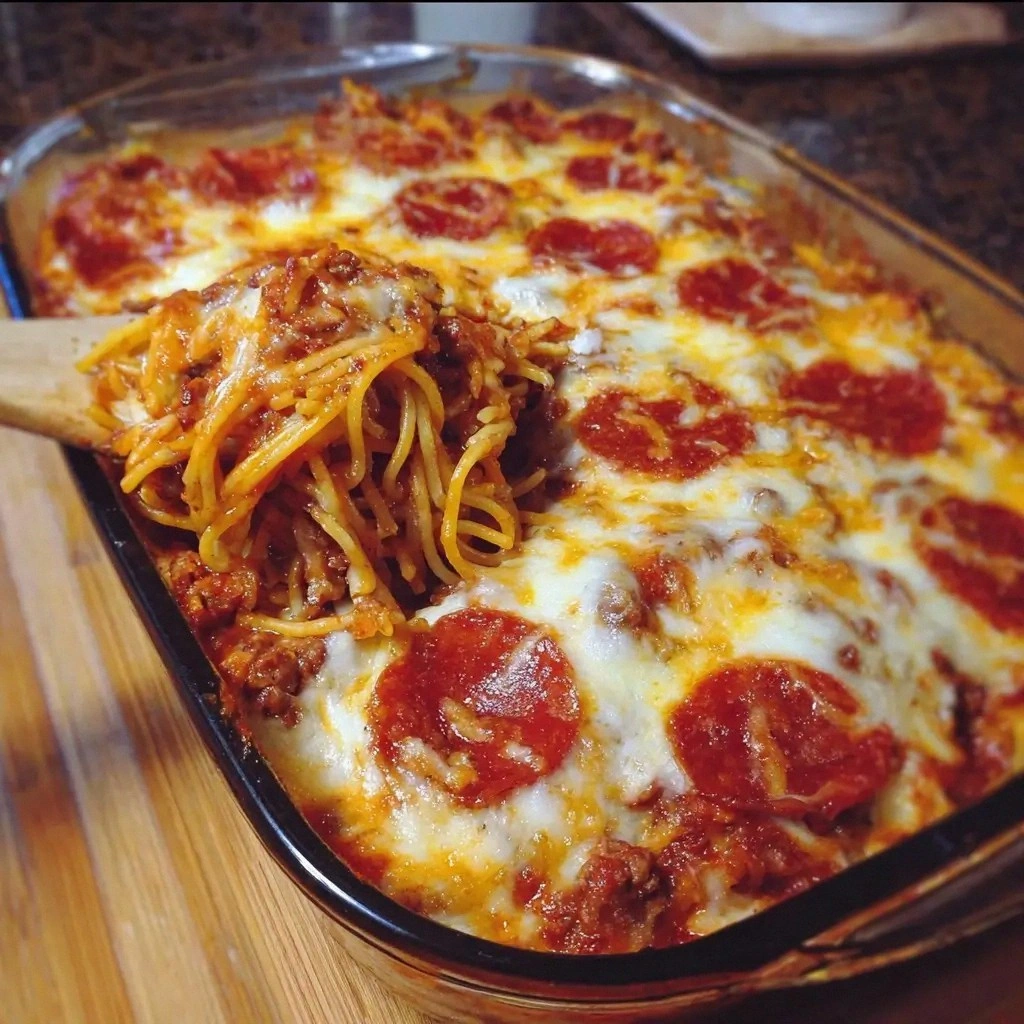
I remember the night the pizza dough turned into a stubborn, unyielding slab of rubber, and I was left staring at the stove, feeling like a culinary failure. That disaster sparked a craving that no amount of plain spaghetti could satisfy. I was determined to create a dish that would bring the heart‑warming comfort of pizza and the comforting familiarity of pasta together in one glorious casserole. The result? A masterpiece that melts in your mouth, with a crispy, golden crust that shatters like thin ice when you bite into it.
Picture the kitchen: steam curling from the pot, the scent of garlic and tomato sauce mingling with the buttery aroma of melted mozzarella. The sound of the pasta bubbling is like a gentle lullaby, while the sizzle of onions in olive oil adds a rhythmic percussion. When you lift the lid, a steaming, fragrant cloud rises, promising a taste that feels like a hug from the inside. Each bite is a burst of umami, a velvety coating that lingers on the palate, leaving a savory aftertaste that beckons for more.
What makes this version stand out? It’s not just the combination of flavors, but the meticulous layering of textures and the strategic use of ingredients that elevate the dish from ordinary to unforgettable. I’ve experimented with different cheeses, sauces, and seasonings to find the perfect balance that delivers that “pizza” punch without the need for a pizza stone. I dare you to taste this and not go back for seconds, because once you try it, you’ll wonder how you ever made it any other way.
Let me walk you through every single step—by the end, you’ll wonder how you ever made it any other way. I’ll share the secret trick that turns a simple casserole into a show‑stopper, the exact timing that ensures the pasta remains al dente, and the finishing touch that gives the top a perfect golden crust. Stay with me here, because this is worth it, and I promise you’ll be shouting from the kitchen: “This is hands down the best version you'll ever make at home.”
What Makes This Version Stand Out
- Flavor: The sauce is a blend of pizza sauce and a splash of red wine, giving it depth and a subtle acidity that cuts through the richness of the cheese.
- Texture: The casserole layers pasta, sauce, and cheese, creating a creamy middle and a crisp, caramelized top that satisfies both comfort and crunch.
- Ease: All the prep is done in a single pot, saving time and clean‑up while still delivering restaurant‑quality results.
- Versatility: You can swap ground beef for Italian sausage, add vegetables, or go vegetarian—this base adapts to any palate.
- Crowd‑Pleaser: The familiar flavors of pizza and pasta make it a guaranteed hit at family dinners or potlucks.
- Ingredient Quality: Using fresh mozzarella and high‑quality parmesan elevates the taste profile and gives the casserole a luxurious mouthfeel.
- Make‑Ahead: The casserole can be assembled ahead of time and baked right before serving, making it perfect for busy evenings.
- Budget Friendly: Despite its gourmet feel, the recipe uses inexpensive staples, keeping the cost low while delivering high flavor.
Alright, let's break down exactly what goes into this masterpiece...
Inside the Ingredient List
The Flavor Base
The sauce is the heart of this casserole. I combine 2 cups of pizza sauce with a splash of red wine, creating a depth that feels like a well‑seasoned marinara. The wine adds subtle acidity, balancing the richness of the cheese and the savory meat. If you skip the wine, the dish still turns out great, but you’ll miss that subtle, wine‑kissed undertone that elevates every bite.
The Texture Crew
The pasta—12 ounces of spaghetti—provides the chewy foundation. I recommend cooking it al dente before mixing, as the casserole will continue to cook in the oven. The 2 cups of shredded mozzarella and 1 cup of grated parmesan create layers of gooeyness and a slightly crunchy top. If you omit the parmesan, the top will be less caramelized, but the dish will still be delicious.
The Unexpected Star
Ground beef or Italian sausage adds a savory, meaty component that balances the tomato sauce. I use 1 pound of ground beef, browning it with diced onion and minced garlic for extra flavor. If you’re vegetarian, replace the meat with sautéed mushrooms or a mix of roasted vegetables. This substitution keeps the dish hearty without compromising the pizza‑like experience.
The Final Flourish
A handful of fresh basil leaves, a splash of olive oil, and a pinch of red pepper flakes finish the dish, adding brightness and a hint of heat. These final touches bring the casserole together, giving it a fresh, aromatic finish that lingers on the tongue. If you’re not a fan of heat, simply leave out the pepper flakes; the basil will still provide that delightful herbal note.
Everything's prepped? Good. Let's get into the real action...
The Method — Step by Step
- Bring a large pot of salted water to a boil. Add the spaghetti and cook until just al dente, about 7 minutes. Drain and set aside. The pasta should still have a slight bite, because it will soften further in the oven. This step ensures the casserole doesn’t turn mushy.
- While the pasta cooks, heat 1 tablespoon of olive oil in a large skillet over medium heat. Add 1 diced onion and cook until translucent, about 3 minutes. The onion should be fragrant, not browned. This base layer adds depth to the sauce.
- Add 3 minced garlic cloves to the skillet and sauté for 30 seconds until aromatic. Be careful not to burn the garlic, as it will become bitter. Then, add 1 pound of ground beef, breaking it into crumbles. Cook until browned, about 6–8 minutes. Drain excess fat if necessary.
- Stir in 2 cups of pizza sauce, 1 teaspoon dried oregano, 1 teaspoon dried basil, and ½ teaspoon red pepper flakes. Simmer for 5 minutes, allowing the flavors to meld. The sauce should thicken slightly, coating the meat evenly.
- Fold the cooked spaghetti into the skillet, tossing to coat it in the sauce. Let the mixture sit for a minute so the pasta absorbs the flavors. This step creates a cohesive mixture before baking.
- Transfer the pasta mixture to a greased 9×13-inch baking dish. Spread it evenly. Sprinkle 2 cups of shredded mozzarella over the top, followed by 1 cup of grated parmesan. The cheeses will melt into a silky, golden layer.
- Bake in a preheated 375°F oven for 20 minutes, or until the cheese is bubbling and the top is golden brown. The edges should start pulling away, indicating a crisp crust. If you want extra crispiness, switch to the broiler for the last 2 minutes.
- Remove from the oven and let it rest for 5 minutes. This rest period allows the casserole to set, making it easier to cut clean slices. While it rests, sprinkle fresh basil leaves and drizzle a little olive oil over the top. The basil adds a burst of freshness that contrasts the rich cheese.
That’s it — you did it. But hold on, I've got a few more tricks that'll take this to another level. The next section will reveal insider tips that will help you avoid common pitfalls and elevate the dish even further.
Insider Tricks for Flawless Results
The Temperature Rule Nobody Follows
Many cooks bake at 400°F, assuming higher heat equals a crispier top. In reality, 375°F gives the cheese a beautiful golden hue while preventing the sauce from bubbling over. I’ve baked this dish at 375°F for 20 minutes and it comes out with the perfect balance of gooey interior and crisp exterior. If you prefer a darker crust, switch to the broiler for the last 2 minutes, but watch carefully to avoid burning.
Why Your Nose Knows Best
As the casserole bakes, the aroma of tomato, mozzarella, and basil will start to rise. Trust your nose; when the cheese is bubbling and the top is golden, the dish is ready. If you’re tempted to open the oven early, you’ll find the sauce still too runny. Let the baking time run its course for the best results.
The 5‑Minute Rest That Changes Everything
After removing the casserole from the oven, let it rest for exactly 5 minutes. This pause allows the cheese to set, preventing a runny mess when you cut. It also lets the flavors meld further, giving the dish a richer taste. I’ve found that skipping this step leads to a soggy center that feels like a lost pizza crust.
The Cheese Combo Trick
Using both mozzarella and parmesan creates a layered texture: the mozzarella melts into a silky goo, while the parmesan adds a nutty, slightly crunchy top. If you’re lactose intolerant, replace mozzarella with a dairy‑free alternative, but keep the parmesan for that signature flavor. My friend tried a dairy‑free version once, and although it was creamy, it lacked the depth that parmesan provides.
The Fresh Basil Finale
Adding fresh basil after baking gives the casserole a bright, herbal finish that cuts through the richness. I sprinkle the basil just before serving, letting it release its oils in the warm dish. If you’re making this ahead of time, add the basil just before reheating for maximum flavor.
Creative Twists and Variations
This recipe is a playground. Here are some of my favorite ways to switch things up:
Mediterranean Medley
Swap ground beef for diced zucchini and cherry tomatoes, add a handful of kalamata olives, and finish with crumbled feta. The result is a light, herb‑infused casserole that feels like a Greek salad baked into one dish.
Spicy Cajun Kick
Add 1 tablespoon Cajun seasoning to the sauce and replace the mozzarella with pepper jack cheese. The smoky heat pairs beautifully with the creamy pasta, giving you a dish that’s both comforting and bold.
Cheese‑Only Delight
Omit the meat entirely and double the mozzarella. Top with a generous sprinkle of shredded cheddar for a gooey, indulgent experience that’s perfect for a cozy night in.
Sausage & Mushroom Fusion
Use sliced Italian sausage and sautéed mushrooms instead of ground beef. The earthy flavors of mushrooms complement the savory sausage, creating a hearty, rustic casserole.
Veggie‑Rich Powerhouse
Add chopped spinach, roasted bell peppers, and a handful of artichoke hearts. This version is not only colorful but also packs a nutritional punch, making it a great option for health‑conscious diners.
Storing and Bringing It Back to Life
Fridge Storage
Store leftovers in an airtight container for up to 4 days in the refrigerator. When reheating, cover the dish with foil to keep moisture from making the pasta soggy. Heat on the stovetop or in a low‑heat oven (325°F) for 15–20 minutes, stirring occasionally.
Freezer Friendly
The casserole freezes well for up to 3 months. Wrap it tightly in plastic wrap, then place in a freezer bag. To reheat, thaw overnight in the refrigerator, then bake at 350°F for 25–30 minutes until heated through.
Best Reheating Method
Add a splash of water or milk before reheating to keep the sauce from drying out. Steam it gently in a covered pot or microwave for 2–3 minutes, stirring halfway through. This trick restores the creamy texture and ensures every bite is as delightful as when it first came out of the oven.