Picture this: I’m in the middle of a Sunday potluck, the table is already stacked with casseroles, deviled eggs, and a smattering of greens, and I’m staring at a bag of potatoes that looks more like a lump of hope than a meal. I remember the last time I tried a potato salad, the result was a soggy mess that had more water than flavor, and the only thing that survived was a few stray sprouts that clung to the side of the plate. That disaster sparked a dare from my friend who challenged me to create a potato salad that would make even the most skeptical guests reach for seconds. I took that dare to heart, and what emerged was a dish that feels like a summer breeze on a hot day, yet is packed with protein, crunch, and a bright, tangy zing that wakes up your palate.
The first time I tasted it, the potatoes were perfectly tender, each bite releasing a buttery softness that clung to the back of my tongue. The dressing— a blend of Greek yogurt, Dijon mustard, and a splash of apple cider vinegar— coated the potatoes like a velvet blanket, yet it was light enough to keep the dish feeling fresh. I could hear the faint hiss of the pan as the onions caramelized, and the aroma of smoked paprika danced with the sharpness of fresh dill. Every spoonful was a harmony of textures: the crispness of diced celery, the subtle snap of green onions, and the creamy swirl of yogurt that made the salad feel like it was breathing. The final touch? A drizzle of olive oil that gave the whole thing a glossy finish without drowning the flavors.
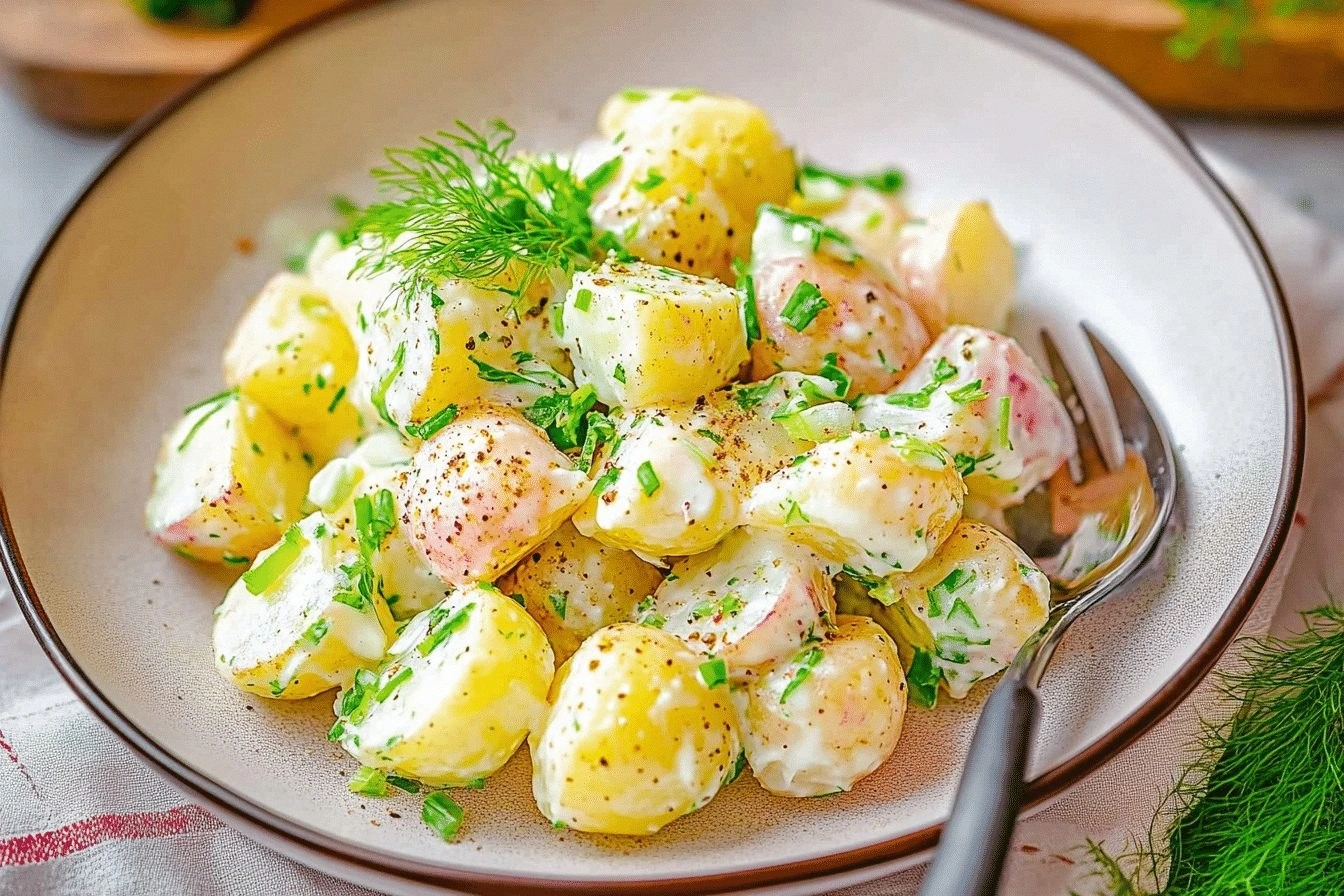
What makes this version stand out is not just the balance of flavors but the way it challenges the status quo. Most potato salads rely on mayonnaise and a handful of spices, but here I swapped the heavy mayo for Greek yogurt to keep the dish light and protein‑rich, and I introduced a secret ingredient—a whisper of honey—to offset the acidity of the vinegar. I also tossed in a handful of fresh herbs that add a pop of color and a burst of freshness that you wouldn’t find in a traditional recipe. This salad is crowd‑pleasing because it’s easy to scale, it can be assembled a day ahead, and it pairs seamlessly with grilled meats, fish, or a simple green salad. And if you’re worried about the texture, the potatoes stay firm, resisting the softening that often plagues other recipes.
I dare you to taste this and not go back for seconds. The next time you’re hosting, imagine the table glowing with this vibrant dish, the scent of fresh herbs mingling with the aroma of grilled summer produce. Stay with me here—this is worth it. Let me walk you through every single step, and by the end, you’ll wonder how you ever made it any other way.
What Makes This Version Stand Out
- Flavor: The combination of yogurt, mustard, and a splash of honey creates a creamy yet tangy dressing that coats each potato like a silky cloak, turning a humble side into a star attraction.
- Texture: Potatoes stay firm and tender, celery adds a satisfying crunch, and the fresh herbs give a lively pop that keeps the palate engaged.
- Nutrition: With Greek yogurt replacing heavy mayo, the salad packs 25 grams of protein while staying under 400 calories, making it a guilt‑free crowd‑pleaser.
- Versatility: The recipe is naturally make‑ahead, and its bright flavors complement grilled meats, seafood, or a simple green salad without overpowering.
- Color: Fresh dill, chives, and a hint of paprika bring vibrant green and subtle orange tones that make the dish visually striking.
- Time: Prep takes just 15 minutes, cooking 30, and the entire process is completed in 45 minutes—perfect for a busy weekday dinner.
- Ease of Scaling: Whether you’re cooking for two or twenty, simply adjust the ingredients and you’ll still get the same flavor profile.
- Make‑ahead Potential: The salad keeps well in the fridge for up to four days; just give it a quick stir before serving.
Alright, let’s break down exactly what goes into this masterpiece...
Inside the Ingredient List
The Flavor Base
The heart of this salad is the dressing, a marriage of Greek yogurt, Dijon mustard, apple cider vinegar, and honey. Greek yogurt provides creaminess without the heaviness of mayo, while the mustard adds depth and a slight piquant kick. Apple cider vinegar cuts through the richness and introduces a bright acidity that keeps the dish from becoming cloying. A teaspoon of honey balances the vinegar’s sharpness, adding a whisper of sweetness that lingers on the tongue.
The Texture Crew
The potatoes are the star, chosen for their waxy texture that holds shape during cooking. Boiled until just tender, they absorb the dressing without turning mushy. Celery and green onions contribute a crisp bite that contrasts with the softness of the potatoes, while diced red onion brings a subtle sharpness that brightens the overall profile. The herbs—dill, chives, and parsley—add a fresh, almost citrusy brightness that lifts the salad into a light, summery feel.
The Unexpected Star
Smoked paprika may seem like a small detail, but it introduces a smoky undertone that makes the salad feel more complex and satisfying. The paprika’s subtle heat is balanced by the sweetness of honey, creating a flavor profile that’s both comforting and adventurous. If you’re a spice lover, feel free to add a pinch of cayenne for an extra kick, but be careful not to overpower the delicate balance.
Everything’s prepped? Good. Let’s get into the real action...
The Method — Step by Step
-
First, bring a large pot of salted water to a rolling boil. Add the potatoes whole, and let them simmer for 15 to 20 minutes, or until a fork can pierce the flesh with ease. This gentle cooking preserves their structure and prevents them from absorbing too much liquid. Keep an eye on the pot; the water should stay just below a boil to avoid overcooking.
-
While the potatoes cook, whisk together the Greek yogurt, Dijon mustard, apple cider vinegar, honey, smoked paprika, garlic powder, onion powder, salt, and pepper in a medium bowl. The mixture should be smooth and free of lumps. This step is crucial because a well‑combined dressing will coat each potato evenly, creating a uniform flavor experience.
-
When the potatoes are done, drain them and allow them to cool to room temperature. Once cooled, cut them into bite‑size cubes. The cooler the potatoes, the less they will release moisture into the dressing, ensuring a creamy consistency. If you’re short on time, you can let them cool in the pot for a few minutes and then transfer to a bowl of ice water.
-
Add the diced celery, green onions, and red onion to the bowl of potatoes. Toss gently to combine. These vegetables add crunch and a subtle sharpness that balances the creamy dressing. If you prefer a smoother texture, you can reduce the amount of celery slightly.
-
Pour the dressing over the potato mixture, and fold gently until everything is coated. The goal is to keep the potatoes intact while ensuring every cube is drenched in flavor. If the salad feels too dry, add a splash of olive oil or a bit more yogurt to achieve the desired consistency.
-
At this point, the salad should smell like a fresh garden and feel like a silky cloud on the palate. Sprinkle the chopped dill, chives, and parsley over the top. These herbs not only add a pop of color but also infuse the dish with a bright, herbal aroma. Be generous with the herbs; they’re the final flourish that elevates the salad.
-
Cover the bowl with plastic wrap and refrigerate for at least 30 minutes. This resting period allows the flavors to meld and the potatoes to absorb the dressing fully. The salad will taste even better the next day, so feel free to prepare it in advance.
-
Just before serving, give the salad a gentle stir to redistribute any settled dressing. Taste and adjust the seasoning if necessary—add a pinch more salt or a dash of pepper to suit your palate. A final sprinkle of paprika can reintroduce that smoky undertone.
-
Serve chilled or at room temperature, depending on your preference. This salad pairs beautifully with grilled chicken, pork chops, or a light fish fillet. For a vegetarian twist, serve it with a side of roasted vegetables or a fresh green salad.
That’s it— you did it. But hold on, I’ve got a few more tricks that’ll take this to another level…
Insider Tricks for Flawless Results
The Temperature Rule Nobody Follows
Potatoes are forgiving, but the key to a perfect bite is cooking them at the right temperature. A rolling boil will overcook the exterior while leaving the interior underdone. Aim for a gentle simmer that keeps the water just below boiling; this allows the potatoes to cook evenly without breaking apart. If you’re using a pressure cooker, reduce the cooking time by 20% to avoid overcooking.
Why Your Nose Knows Best
When the onions caramelize, the aroma will shift from sharp to sweet. That sweet smell is a clear indicator that the onions have developed the right depth of flavor. If the scent remains pungent, let them cook a few minutes longer. A sweet aroma means the onions are ready to be mixed into the salad.
The 5-Minute Rest That Changes Everything
After you’ve mixed the dressing with the potatoes, let the salad sit for at least five minutes before serving. This short rest allows the flavors to marry and the potatoes to absorb the dressing fully. The result is a more cohesive and flavorful salad. If you’re short on time, a quick stir and a taste check will suffice.
The Herb Shuffle
Fresh herbs can wilt quickly if added too early. Add them after the dressing has settled into the potatoes, right before serving. This preserves their bright color and ensures their flavors remain vibrant. If you prefer a more mellow herb taste, you can rinse the herbs before adding them, which softens their intensity.
The “No‑Mess” Technique
Use a silicone spatula to fold the dressing into the potatoes. The flexible surface prevents the potatoes from breaking apart, while the gentle motion ensures even coating. A wooden spoon can crush the potatoes, ruining the desired texture. A silicone spatula keeps the salad intact and looks professional.
Creative Twists and Variations
This recipe is a playground. Here are some of my favorite ways to switch things up:
Mediterranean Medley
Swap the Greek yogurt for a mixture of feta and ricotta. Add chopped kalamata olives and sun‑dried tomatoes for a burst of Mediterranean flavor. This version pairs wonderfully with grilled lamb or roasted eggplant.
Spicy Southwest
Replace the Dijon mustard with chipotle mayo for a smoky heat. Toss in corn kernels, black beans, and diced avocado. This salad is a perfect side for tacos or grilled steak.
Herb‑Infused Vegan
Use a plant‑based yogurt and replace the olive oil with a drizzle of tahini. Add chopped fresh mint and basil for a refreshing twist. This version is ideal for a vegan gathering or a light lunch.
Asian Fusion
Incorporate a splash of soy sauce and a dash of sesame oil into the dressing. Add sliced cucumber, shredded carrots, and a sprinkle of toasted sesame seeds. This salad works beautifully as a side to teriyaki chicken or grilled tofu.
Rustic Country
Add sliced pickles and a handful of chopped bacon bits for a savory, salty crunch. Finish with a drizzle of honey mustard for extra sweetness. This version is a hit at backyard barbecues.
Summer Berry Surprise
Stir in a handful of fresh blueberries or raspberries for a burst of color and a sweet contrast. The berries’ acidity will balance the creamy dressing. Serve this salad with grilled chicken or a simple green salad for a refreshing meal.
Storing and Bringing It Back to Life
Fridge Storage
Store the salad in an airtight container for up to four days. The dressing will keep the potatoes moist, preventing them from drying out. When you’re ready to serve, give it a quick stir to redistribute any settled dressing.
Freezer Friendly
For longer storage, keep the potatoes and dressing separate. Freeze the dressing in a freezer‑safe bag and thaw it in the refrigerator before mixing. Combine with pre‑cooked potatoes, and the salad will stay fresh for up to two weeks.
Best Reheating Method
If you need to warm the salad, add a splash of water or a drizzle of olive oil, then gently heat it in a saucepan over low heat while stirring. This technique steams the salad back to its original creamy texture without overcooking the potatoes.